Part I
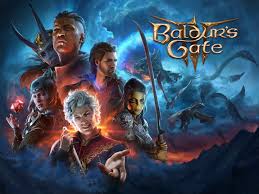
The time has come…to talk about one of the best games ever made*:
Baldur’s Gate 3 (This is a link to the Honest Game Trailer video that will give you a great deal of insight with a sense of humor. It’s also a little spoilery, so be forewarned.)
By now, I would imagine, even if you’re not a gamer, you’ve heard about this 2023 Game of the Year winner. It took the (gaming) world by storm. On the other hand, it took The Sis and I a little while to get on board, only because we wanted the hard copy, which wasn’t available the first year, and which also meant that we had to invest in a new Xbox along with the game. A hefty, unprepared for, purchase.
We worked with people who continued to talk it up and we had to avoid so many things that may have spoiled this marvel for us for ever so long. Eventually, we took the plunge.
Worth every penny.
*But be aware, this game isn’t for everyone. It’s a graphic turn-based RPG, rated M due to the depictions of violence, the coarse language and bloodshed, in addition to nudity and sexual content.
Based on the table top game, Dungeons and Dragons, that in the 80s started a worldwide panic because our parents were led to believe that it was a tool of the devil – fun fact, look it up – earlier versions of the video game are considered great in their own right, but the third game in the series is unlike anything before it.
Dungeons and Dragons was first published in the early 70s. If you’re roughly my age, you may have played or knew of people who did. They were nerds or geeks or outcasts. Or so the consensus deemed them. The phrase Dungeon Master is from this game. If you watched Stranger Things, it’s the entire basis of the series. And if you watched the extremely well done 2023 film, Dungeons and Dragons: Honor Among Thieves, you’ll have some understanding of the world.
It’s medieval fantasy with magic, politics, religion, and a world ending kind of event you must thwart. All things I enjoy in not only my gaming (one reason I love RPGs), but my writing, movie and tv watching, and reading as well. I knew I’d enjoy it, but I didn’t expect to consider it the best game I’ve ever played, but here we are.
Now, you may be wondering, “Do you love it more than Dragon Age?” And my answer would be, “Even in the shadow of Dragon Age: The Veilguard, the Dragon Age Universe still has my heart, always will, but this game is a feat of wonder and possibilities.”
Now, among the endless positives this game entails, there are a few negatives, so as I’ve done with my other video game reviews, let’s break it down.
Let’s list the Positives first.

Character Creator
If you’ve read any of my previous video game reviews, you might recall that I love to create new characters in a well designed character creator. Baldur’s has a wonderful system with a ton of choices. Almost too many, if you’re easily overwhelmed.
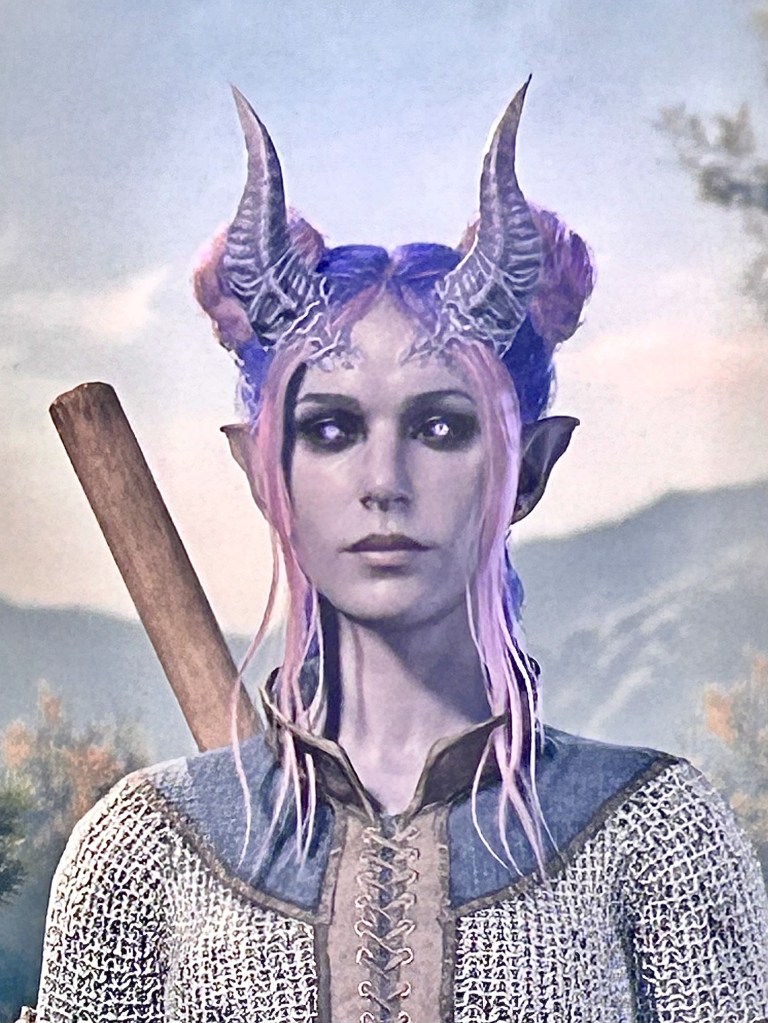
There are eleven races to choose from, any sex you prefer. There are a dozen classes to begin with as well as a dozen backgrounds. Not only can you create a unique character (my elven wizard, Bryn is here for reference, as is my tiefling cleric, Peri – both adorable, if I may so), should you choose, you can play as an “origin” character – any of the companions that you’ll recruit along the way, giving you so many avenues to explore.
And after all those painstaking choices, you get the opportunity to create a second character, a Guardian before venturing forth. You may take less time and effort to make a distinctive Guardian after the hours you just spent creating the other.
Once you decide what your protagonist will look like, and what they’ll be capable of, you will quickly start making decisions as to the type of morality and belief system they hold dear. Will you play as a kind, all-round do-gooder? Or perhaps you’re out to make some coin? Another option, the Dark Urge is an entirely different choice in the character creator that will allow you to give in to your dark side and play full evil, or perhaps you will try to fight against your nature.
Right off the bat, before you’ve stepped into the world, you discover that one playthrough will not give you a full picture of what the developers at Larian have made.
Story & Lore
The story of Baldur’s Gate 3 is told in three distinct acts, and there’s a lot of story within them. From what I’ve learned, there’s a lot of cut content as well, meaning the game could’ve been even bigger. Offhand, I think I clocked in around 180 hrs, and I didn’t do everything, while The Sis was over 200. Yeah, it’s that kind of game.
You, the protagonist, along with so many others in the world, have been infected by a parasite. And not just any parasite, an Illithid or Mind Flayer tadpole. The tadpole is used as a means of reproduction, for the parasite will transform the host into a Mind Flayer, a tentacled humanoid creature that consumes brains.
They are considered a great evil, a hive mind subservient to an Elder Brain that controls all Mind Flayers linked to it. They’ve wiped out and enslaved civilizations.
Not wanting to change, you find others that were infected and band together in an effort to remove the parasite and avoid the transformation. Henceforth your journey begins. This is just the tip of the story iceberg. There are different people to save, hags to fight, places to visit, camps to destroy, an entire land to liberate, and so much more…or not. You are given a lot of choices to bend the world to your will.
Companions
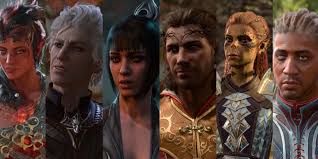
These are among some of the most interesting people I have ever tried to save the world with. I adore (almost) all of them. They come from varied backgrounds, with unique perspectives, their own agendas, and wonderful character arcs (plural because there are so many choices to be made). In order of the picture above, there is Karlach, who despite being betrayed and having to fight for survival for many years, is a cinnamon roll and a loyal friend. Then there’s Astarion, who is among one of my favorite characters ever invented. He has a tortured background, but depending on your treatment of him can be changed in a number of ways.
Shadowheart also has a dark past and is a devoted cleric in service to her goddess, but with a change in perspective can be swayed to thinking about life differently. Gale is a wizard who once had the love of the goddess of magic, herself. After a magical mishap, he has spent time alone, so he’s adorkably awkward, but well meaning, if a bit haughty.
Lae’zel is from a warrior race that eons ago rose up against the Mind Flayers. She is a hard-edged character that can become one of your closest allies. Wyll is a do-gooder type. He has made tough decisions to save people and suffered great consequences because of it. Although he’s absolutely the type of character I would normally adore, for some reason, I can’t get behind him or truly care about his cause. Sorry, Wyll.
There are a handful of other companions you can recruit along the way, some by the nature of your choices, such as Halsin, Jaheira, Minsc, and Minthara. Some of your choices may also lead to some of your party members leaving your company permanently, which will give you an entirely different playthrough as their dialogue, story arcs and quests will no longer be available.

Romance
Within moments of meeting Astarion, I was immediately drawn to him. I mean, look at him. His voice actor, Neil Newbon is extraordinary, and he’s just such fun character that there was no way I wasn’t going to romance him. And I started, although it took some persuasion on my character’s part because she’s a goody goody, and he’s sort of turned off by that, initially.

And then I met Gale. Oh, Gale. Eventually, I had to make a choice. I couldn’t keep them both, sadly. Because of the type of character I was playing, Gale made more sense for her. His voice actor, Tim Downie, is magical (pun intended) as well. His voice is rich and soothing, and often times reassuring.
Peri, on the other hand, is going to make that sultry man love her!
The writers did a wonderful job creating these romances. There is a great deal of dialogue, there are tons of cut scenes, and there are choices you don’t expect to have to or get to make over the course of the game’s timeline.
The romances do not have restrictions based on sex or race. You can romance any of the origin characters. There are also opportunities for “encounters” with other characters along the way. It’s a fully realized world, sometimes with interesting, surprising, and NSFW details.
Other Characters
This is a bit of a spoilery section, and I don’t want to do that to you, should you decide to play, but needless to say, there are some well written, superbly acted, interesting side characters you’ll meet along the way, like Aylin, Isobel, and Orin, just to name a few.
Soundtrack
As with film, video game music sets the tone, it sometimes warns you of danger, or enhances the romance. Music is a big part of the experience, and composer Borislav Slavov has created some truly beautiful and inspiring pieces with this soundtrack. In an Act I side quest, you encounter harpies singing a luring song. I hummed that tune for days afterward. After meeting the bard, Alfira, she sang an original tune that I couldn’t get out of my head for weeks. The Sis, after hours of replay, brought the song, The Power to the top of her most played songs of the year within a few short months. And then there’s Raphael’s Final Act. It’s stellar. The album has 43 songs, some of which are alternate versions of others, and there are so many standouts. In addition to the above, there’s Twisted Force, Bard Dance, Down By the River, and I Want to Live.
Give it a listen. You won’t be disappointed.
Graphics
It’s a beautiful game. What else needs to be said? The world is richly designed. There’s so much detail every where you look, and not just in the environment, but also in the fabrics, the armor, the spell casting. If your character has a blessing, you may glow with an aura, or should you find yourself encumbered, you’re surrounded in a red glow. While it’s not completely open world, there’s a great deal to look at, explore, and discover, and you’ll wonder at how the game doesn’t crash.
Mechanics
Whatever you want to do in this world, you can pretty much do it. Want to talk to every NPC? Almost every single character in the game is available to interact with, and pretty much every single one of them has a unique name. Want to open a crate to check for loot? You can open all the crates and all the jars. Want to take a painting off the wall? Go ahead. Want to open every door, jump (nearly) everywhere, steal any and all things within grabbing distance? Sure, why not. Want to talk to the animals, shape shift, pass through dimensions? There are potions and spells for that. Want to push things over cliffs, put boxes in boxes, sneak attack or try to talk your way out of a fight. Give it a go.
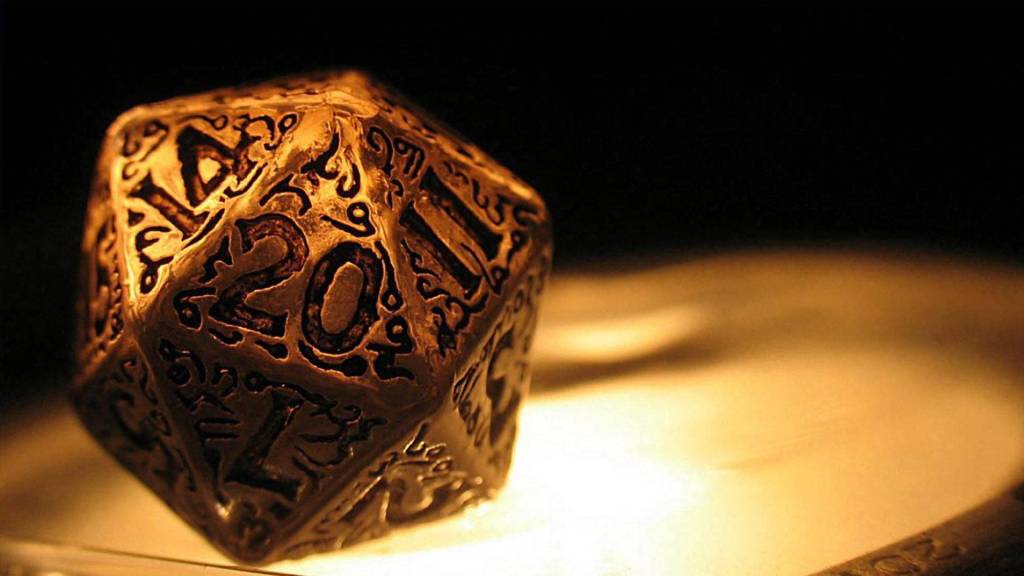
D&D is reliant on the roll of the dice. You may have heard of a Natural 20 which is awesome, or if you roll a 1 you’re doomed, and this system leads to a number of outcomes. You use the dice to persuade or deceive, pass intelligence or knowledge checks. The game mechanics are unlike most other games I’ve played, and should a certain outcome ruin your chances at plot point, the developers created a contingency for the major ones. You’ll get a second chance, which is just genius.
Part II
The positives of this game cannot be overstated. It’s an amazing, beautiful, fully realized wonder of achievement, and it’s why it has become one of the best games I’ve ever played, if not the best.
I know. I know.
I’m into a second playthrough and am still discovering all sorts of new things, which is why my Pros List aka Part I was so long. As wonderful as this game is, it’s not for everyone – as previously mentioned it’s a graphic turn-based RPG, rated M due to the depictions of violence, the coarse language and bloodshed, in addition to nudity and sexual content – and it does have a few things that could be considered “cons”.
Story
There is a lot of story. Like more than you can even begin to imagine for a video game. Baldur’s Gate is based on a legacy that goes back some 50 years, so there are years of lore and land and creatures and history, so it’s understandable that one playthrough won’t give you everything in the way of story.
While the 3 Act structure will give you an overarching story with major plot points, if you don’t explore every nook and cranny, talk to every NPC or even your companions, return to camp often, or read all the letters, books, and plaques in the world, there’s quite a bit of content you’ll miss. The completionist in me found it frustrating to fail certain checks that may have led to finding secret rooms, treasure, or encouraging certain outcomes, which could also derail me from learning more.
There’s also the extra story content based on your character. If you play with a certain background or class, you’ll get specific dialogue options that will enhance your experience. If you play as an origin character, you’ll also get more of their back story, and then there’s the Dark Urge storyline which is its own thing entirely, so you have lots of options, which leads to con #2 –
Choice
If you are easily overwhelmed by a great deal of content, the choices available to you in BG3 could be considered a con. I struggled with this during my first playthrough. I wanted to know the reaction to each choice in dialogue. If I failed a check, I would reload in the hopes the dice would roll in my favor and I would catch whatever I missed. I would swap out party members hoping one of them had a higher characteristic like intelligence or survival that would lead to a better outcome. This can stall your experience because you may find yourself bogged down by trying to see every eventuality.
I soon realized I had to forego discovering everything the first time around because I was losing a sense of urgency due to the diminishing momentum. Besides I knew I was going to play the game again.

Starting with the character creator which at first seems limited, quickly devolves into chaos with the sheer volume of options for your character. There are a dozen races and a dozen backgrounds, and after a recent update, new subclasses with new skills to choose from. There’s skin tone, eye colors (that in other games seemed irrelevant because you never see your character that close), and hairstyles that allow for highlights, so choosing how dark you want those pink streaks woven through your green braid are all possible.
Am I going to match her tattoos? Uh, yeah.
And after all that, you get to create a second character, a Guardian. You may end up with a little creation fatigue.
Will you play as a do-gooder? Or are you out for yourself? Are you religious or political? Who do you want to romance? How will you sway your companions’ fates? This is just the tip of the iceberg. While I was only overwhelmed initially because I wanted to know everything immediately, The Sis pointed out that that’s the storyteller and gamer in me. When I play a game, I want the details clearly-ish laid out for me by the end of the first run. BG3 is not your typical game. It has layers, and you have to get comfortable in the unknowing…which leads to con #3 –
Mechanics
If you’ve played video games for any length of time, some things are innate. The same cannot be said for Baldur’s Gate. There are so many things you can do, many are things you wouldn’t even think of, and while that’s amazing, there’s no guide to really tell you what’s possible. You just have to try things and see if they work. It’s not just about strategy, it’s discovering you can kind of do whatever you want. There’s both a fear and a freedom in such knowledge. The fear is that a lot of the games you’ve played previously have just laid things out for you, nice and neat. They haven’t let you be imaginative, and now you feel a bit dense when it comes to playing this game.
The freedom is exactly that…anything is possible.
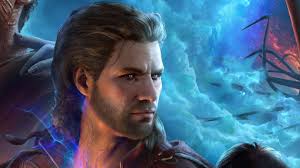
I’ll share a couple bonehead discoveries I made in my second playthrough, so far. One, if you use a character with a higher persuasion skill than your own, you can get better deals with merchants. Gale, yes, Gale, the wizard gets better prices than the charming, I feel almost too persuasive Astarion, and shockingly, way better than my own character. So change out who’s leading the party, and choose to interact with merchants or other plot driven characters to see the varying results.
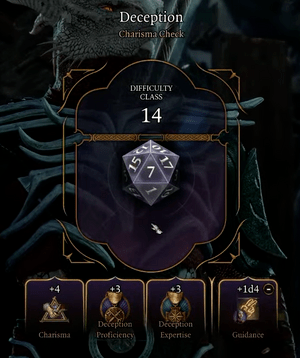
Two, when trying to pass a certain check, either persuasion or a knowledge of history or religion, if your character has a bonus, such as guidance, you need to not only bring up the bonus, but also select it. It will become highlighted, but I did not know this. The screen will show “add bonus”, so I would add it, but you may have more than one choice, so you need to choose – I never did. This can change a lot of the outcomes of your choices. ((face palm))
There are a couple of other things, like using the Scroll of Revivify – was not made clear how it works, so it took a few tries – or the Fly skill – couldn’t figure it out the first time around.
I’m sure I’ll discover more. I also discovered that The Sis and I did different things, so talking with another player has led to learning more about the options available, or how to use certain skills, etc.
To be clear, I don’t classify any of these as a negative, personally. In fact, it only enhances the experience knowing that each playthough may lead to new discoveries, and that’s awesome. I work with someone who has attempted multiple playthroughs but found themselves overwhelmed by the choices, or even a lack of backstory for their character, but is now using the honor mode (only one save available) and playing as origin character, Wyll, yes, that Wyll, and finally making progress.
All of the choices, all of the story content is meant to enhance your gaming experience. The freedom to do so many things allows for the imagination to run wild, and while maybe not the right game for everyone, a spectacular game nonetheless.
 A Writer's Discrepant Memoirs and Other Tales