Rambling Review : Baldur’s Gate 3 Part II

The positives of this game cannot be overstated. It’s an amazing, beautiful, fully realized wonder of achievement, and it’s why it has become one of the best games I’ve ever played, if not the best.

I know. I know.

I’m into a second playthrough and am still discovering all sorts of new things, which is why my Pros List aka Part I was so long. As wonderful as this game is, it’s not for everyone – as previously mentioned it’s a graphic turn-based RPG, rated M due to the depictions of violence, the coarse language and bloodshed, in addition to nudity and sexual content – and it does have a few things that could be considered “cons”.

Story

There is a lot of story. Like more than you can even begin to imagine for a video game. Baldur’s Gate is based on a legacy that goes back some 50 years, so there are years of lore and land and creatures and history, so it’s understandable that one playthrough won’t give you everything in the way of story.

While the 3 Act structure will give you an overarching story with major plot points, if you don’t explore every nook and cranny, talk to every NPC or even your companions, return to camp often, or read all the letters, books, and plaques in the world, there’s quite a bit of content you’ll miss. The completionist in me found it frustrating to fail certain checks that may have led to finding secret rooms, treasure, or encouraging certain outcomes, which could also derail me from learning more.

There’s also the extra story content based on your character. If you play with a certain background or class, you’ll get specific dialogue options that will enhance your experience. If you play as an origin character, you’ll also get more of their back story, and then there’s the Dark Urge storyline which is its own thing entirely, so you have lots of options, which leads to con #2 –

Choice

If you are easily overwhelmed by a great deal of content, the choices available to you in BG3 could be considered a con. I struggled with this during my first playthrough. I wanted to know the reaction to each choice in dialogue. If I failed a check, I would reload in the hopes the dice would roll in my favor and I would catch whatever I missed. I would swap out party members hoping one of them had a higher characteristic like intelligence or survival that would lead to a better outcome. This can stall your experience because you may find yourself bogged down by trying to see every eventuality.

I soon realized I had to forego discovering everything the first time around because I was losing a sense of urgency due to the diminishing momentum. Besides I knew I was going to play the game again.

Starting with the character creator which at first seems limited, quickly devolves into chaos with the sheer volume of options for your character. There are a dozen races and a dozen backgrounds, and after a recent update, new subclasses with new skills to choose from. There’s skin tone, eye colors (that in other games seemed irrelevant because you never see your character that close), and hairstyles that allow for highlights, so choosing how dark you want those pink streaks woven through your green braid are all possible.

Am I going to match her tattoos? Uh, yeah.

And after all that, you get to create a second character, a Guardian. You may end up with a little creation fatigue.

Will you play as a do-gooder? Or are you out for yourself? Are you religious or political? Who do you want to romance? How will you sway your companions’ fates? This is just the tip of the iceberg. While I was only overwhelmed initially because I wanted to know everything immediately, The Sis pointed out that that’s the storyteller and gamer in me. When I play a game, I want the details clearly-ish laid out for me by the end of the first run. BG3 is not your typical game. It has layers, and you have to get comfortable in the unknowing…which leads to con #3 –

Mechanics

If you’ve played video games for any length of time, some things are innate. The same cannot be said for Baldur’s Gate. There are so many things you can do, many are things you wouldn’t even think of, and while that’s amazing, there’s no guide to really tell you what’s possible. You just have to try things and see if they work. It’s not just about strategy, it’s discovering you can kind of do whatever you want. There’s both a fear and a freedom in such knowledge. The fear is that a lot of the games you’ve played previously have just laid things out for you, nice and neat. They haven’t let you be imaginative, and now you feel a bit dense when it comes to playing this game.

The freedom is exactly that…anything is possible.
I’ll share a couple bonehead discoveries I made in my second playthrough, so far. One, if you use a character with a higher persuasion skill than your own, you can get better deals with merchants. Gale, yes, Gale, the wizard gets better prices than the charming, I feel almost too persuasive Astarion, and shockingly, way better than my own character. So change out who’s leading the party, and choose to interact with merchants or other plot driven characters to see the varying results.
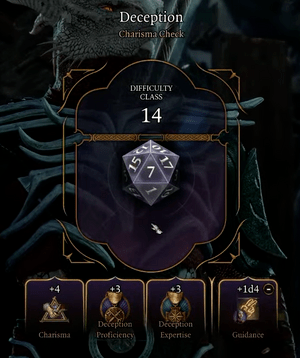
Two, when trying to pass a certain check, either persuasion or a knowledge of history or religion, if your character has a bonus, such as guidance, you need to not only bring up the bonus, but also select it. It will become highlighted, but I did not know this. The screen will show “add bonus”, so I would add it, but you may have more than one choice, so you need to choose – I never did. This can change a lot of the outcomes of your choices. ((face palm))

There are a couple of other things, like using the Scroll of Revivify – was not made clear how it works, so it took a few tries – or the Fly skill – couldn’t figure it out the first time around.

I’m sure I’ll discover more. I also discovered that The Sis and I did different things, so talking with another player has led to learning more about the options available, or how to use certain skills, etc.

To be clear, I don’t classify any of these as a negative, personally. In fact, it only enhances the experience knowing that each playthough may lead to new discoveries, and that’s awesome. I work with someone who has attempted multiple playthroughs but found themselves overwhelmed by the choices, or even a lack of backstory for their character, but is now using the honor mode (only one save available) and playing as origin character, Wyll, yes, that Wyll, and finally making progress.

All of the choices, all of the story content is meant to enhance your gaming experience. The freedom to do so many things allows for the imagination to run wild, and while maybe not the right game for everyone, a spectacular game nonetheless.

Have you played Baldur’s Gate 3? Did I miss any pros or cons you found particularly interesting? Let’s chat!

Happy Gaming!
Rambling Review – Dragon Age: The Veilguard Part III – The Pros

I apparently had a lot more to say about the negatives of this game than I initially thought. I apologize for the long Con post, and try as I might, I couldn’t make it shorter. I think I edited that post like 20 times.

Yeah.

Just a quick side note, I forgot to mention a character I was certain would be included in the new game. In the short story compilation, Tevinter Nights, there was a story about the Antivan Crows, and the house that one of the fans’ favorites comes from, Zevran. I looked everywhere, kept an ear open, and they only offered us a whisper of him because of his actions in game 1. ((sigh))

So let’s move on to the positives, of which I also found many. I’ll try to be more succinct this time around.**

Soundtrack

Ahead of the game’s release, the main theme was accessible for a listen, and I liked it upon the first play. I’ve enjoyed all the soundtracks for the Dragon Age series, and this one had the added benefit of being co-written by one of my favorite composers, Hans Zimmer. You can hear his influence on all the tracks, and it makes for an enjoyable listen.

Side note, I had the pleasure of seeing and hearing Hans Zimmer live a few months ago. If you’re a fan of his music, I would definitely encourage going to his concert. It’s an amazing experience.

Character Creator

I like a good character creator. I enjoy making different characters and exploring all the options available, and The Veilguard’s is pretty good with the variety of choices – from hair to makeup, scars to tattoos, and vitiligo to heterochromia. This time around they included some looong hairstyles, and the movement in-game is quite a feat of technology. Hair moves like real hair, and I found myself in awe of it often. I also liked that in the creator they offered an environment/background adjustment to see how your character would look before you finalized the decision. This may not seem like a big deal, but when choosing certain colors, especially with makeup, stark light, or dimly lit areas may cause the colors to look quite different than you imagined.

Thankfully, they returned with the Mirror of Transformation that used to be only accessible at the Black Emporium. It is now at camp, so that should you wish to change anything, a hairstyle as time passes, or maybe your character’s eyes are a little too close or too far apart, you can make adjustments any time without having to leave home.

Different Factions

I was delighted to learn that the protagonist would come from one of six backgrounds – the Grey Wardens, the Antivan Crows, the Mourn Watch, the Lords of Fortune, the Shadow Dragons, or the Veil Jumpers. I didn’t give it a second thought. I get to be a Warden again! As I mentioned in the Cons post, no matter which background you choose, you will be temporarily exiled from your group because of a noble action you took prior to the game’s start, but I like that interactions and specific dialogue options are available to you given your affiliation.

I liked playing as a Warden given the plot of the game and how much is relevant to that faction, in particular. The Sis is playing as a member of the Mourn Watch, a group we had only heard of previously. Also, each of our companions is from one of these factions, so interactions between them and with our protagonist offers more insight.

Spell Casting

Given a choice, I will always choose to play as a mage first. I like magic. Although, now thinking about it, my first ever Dragon Age character was a dual wielder…huh. Well, knowing what I do now of the Dragon Age world, and how it views mages, I have since chosen to play as one first with each new game.

The spell tree has a vast array of spells to choose from, many different from the previous games, and depending on your background choice, or the kind of mage you want to be, there are three different routes to take in order to grow your power. The graphics are beautifully designed and fun to see in action, and this time around combos with your companions are available to deal more damage.

New Companions

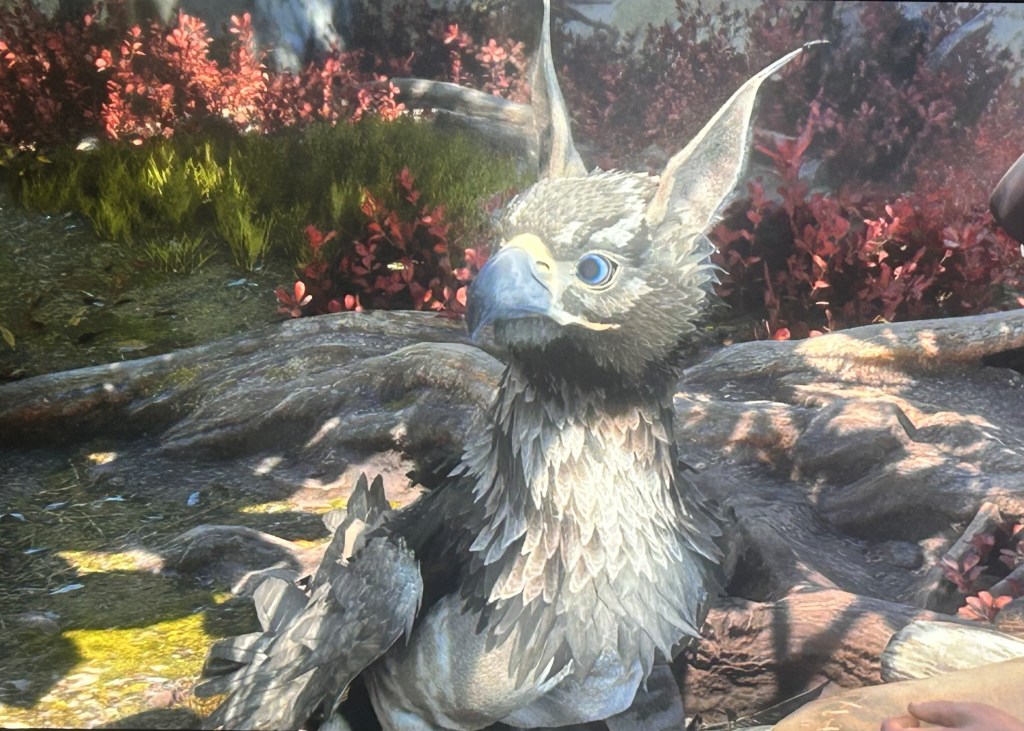
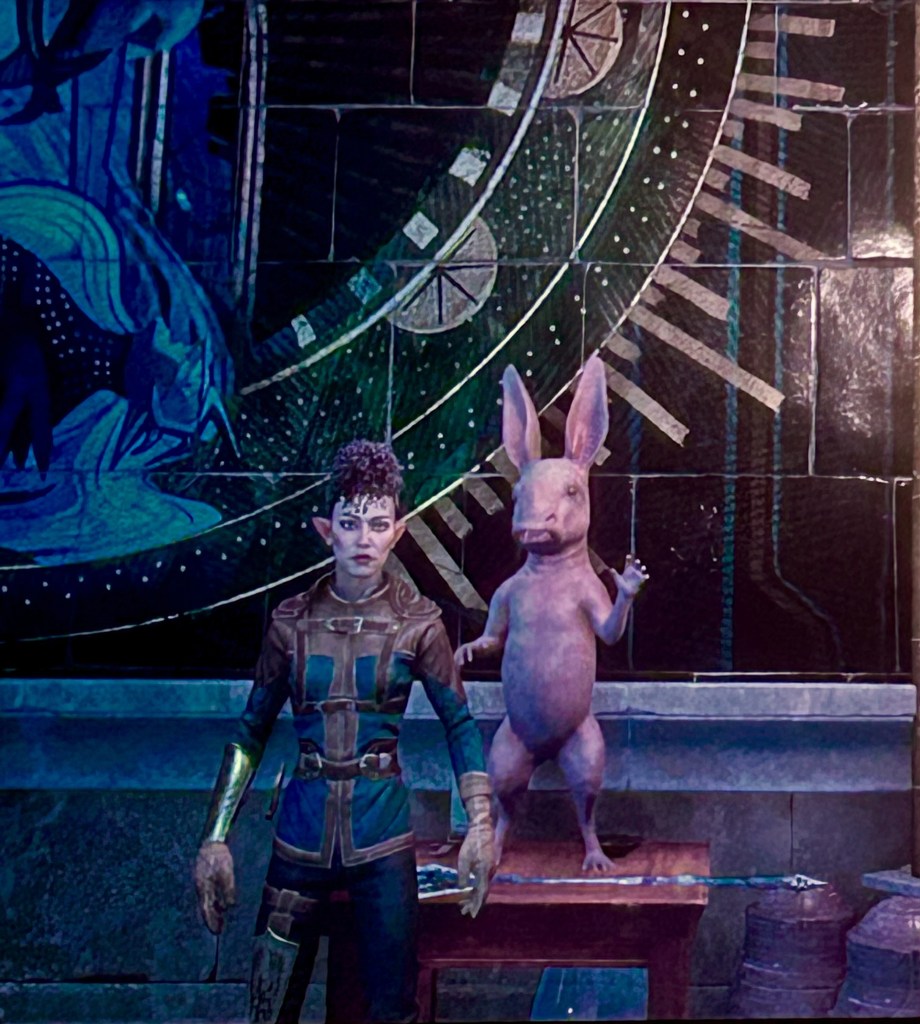
Since the first game, there are always companions you love, you sort of loathe, and some you kind of ignore. This time is no different. I ended up liking characters I didn’t expect, but the best addition was that some of our companions had their own companions. Assan (–> this adorable little nugget) can be played with, hugged, and booped, and you can play rock, paper, scissors with Manfred and they both must be defended at all costs.

Graphics

As I mentioned, the spell casting had lovely graphics, and without spoilers, Lucanis has an ability that allows him to sprout wings and they are beautiful. Locations and in-world items and features all look amazing and it made exploring quite enjoyable.

Gift Giving

In all of the Dragon Age games, finding meaningful gifts to give your companions is a sweet side quest to incur favor. This sometimes helps with the companions that generally don’t agree with your actions and choices, or it can hasten a potential love interest’s favor to advance the romance. What I appreciated this time is that the gifts you give are physically represented in each companion’s quarters, so when you visit, you can see the gift on display.

New Locations

Since the beginning, we’ve heard reference to a number of other countries in the world of Thedas and now we finally get to see them. Most of our companions in each game are from other places, and through them, we learn a little of each country’s culture and history. This game allowed us to visit distant lands and people, and there was some lovely design, each with their own aesthetic.

*Downside, the locations are not fully open world. Oddly, as part of the hand holding of the story, you know, for the kid gamers, some places were closed off until the story progressed to a certain point, and then those restricted areas would become available to explore. Even near the end of the game, maybe given some choices I made, or a missed opportunity, some of those areas were still closed to me. Huh? While this happened in previous games too, sometimes, it was glaringly obvious in game 4.

Romance developments

I was a little torn between two characters to romance, and when the choice needed to be made, I found it interesting that the companion I didn’t choose found love with another character. I won’t spoil it. There are also other companions who find romance with each other, and this is a nice detail that I like that they added because it’s more true to life. People confined to a specific group for a length of time tend to like others in that circle.

*Teeny downside, they removed the racial or sexual orientation preferences they had enacted in Inquisition. Previously, some companions liked only female elves, or only men of any race, but now, everyone is bi and likes everyone. Not exactly a con, but feels like a step backwards.

Armor and Weapons

The addition of tons of choices for both armor and weapons based on the factions we have been introduced to is a great side quest as you keep an eye out for those items as you explore the world. You can buy pieces or find them in chests, and most of the designs are interesting and beautiful and they add an extra layer of detail to the game. A little side note, if you love an armor set or weapon, but another offers better stats, like “hide helmet” you can use the armor or weapon aesthetic you like visually while the better option hides beneath.

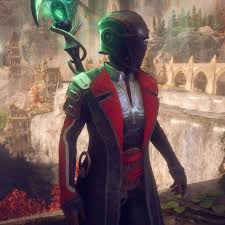
I wore the pictured armor set, a lot. Commander Shepard’s elite military status in the Mass Effect series represented in Dragon Age gear, uh yeah. I’ll take that. Side note, there was Dragon Age armor introduced way back in ME2, so this armor was overdue.

Story Decisions

There are some interesting choices to be made, so while you can’t make a character hate you, there is an opportunity to harden one companion and make them less trusting of you for some time. You can also influence many of your companions’ story arcs which does allow for some replayability to see how an alternative choice may affect them and the story. Even the Inquisitor, during a conversation, can be swayed in how they may handle Solas when the time comes. Many of the companions have pretty decent story arcs, and they have multiple steps, which continues to garner more favor, so basically, they all love you by the end.

But, near the end, there are a few decisions that have dramatic effect on the story, and after so much hand holding and fluff, it felt like a nod to the earlier dark themes of the previous games. And also, slightly out of place, but I was happy to see them.

Solas’s Character Arc

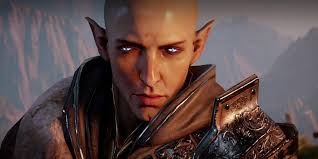
I am a Solas fan. I think of him as such a tragic figure, and I like how his character was highlighted – his struggles, his loyalty to an old fried, the burden of responsibility held for a thousand years – he’s a deeply rich character. Now, the story didn’t go at all as I expected, and I’m not sure when BioWare decided to change it all up, and despite the lack to wrap up to so many other story lines, thankfully, Solas’s arc got resolution. I was happy for that, at least.

There’s a lot to dislike about Dragon Age: The Veilguard, let’s be honest, but there’s also a bit to like (I didn’t even mention the voice acting and the familiar voices), and there’s more to talk about as well. It’s a divisive game, and considering the extremely long wait for it, it is, sadly, disappointing. I had high hopes, too high, I suppose, and that’s why I, and so many others were disappointed. I love the series. You all know. Tattoos, fan fiction, merch…I’m dedicated.

I will play the game again, as I mentioned, there are some choices you can make that may make alternative playthroughs more interesting, or at least different, but not at the same level of the previous games, which is just disappointing. I don’t have another word, sorry.

What are your thoughts on Dragon Age: The Veilguard or the other DA games, in general? Let’s chat!

Happy Gaming!

*A bit more con even in the pros

**15 rewrites and still too long…thanks for sticking with me!

Rambling Review – Dragon Age: The Veilguard Part II – The Cons

I’ve wanted to work in video games for years. Actually, it’s because of DAO. I just loved it. But I have no idea how games are made, besides the behind the scenes footage I’ve seen. It takes dozens upon dozens of people working in teams to not only write all the amazing characters and dialogue and story, but there are a variety of artists, and voices actors, and engineers, among so many others. I’m in awe of what they do, and in spite of all the negativity The Veilguard received, it’s still an impressive feat of creativity.

But it has its problems. So let’s start with those.

The removal of The Keep.

With game 3, BioWare included an out-of-game device called The Keep. Decisions made in the past two games could be chosen and altered, which in turn would have an effect on world of the new game. I don’t know what it takes to create and implement such a tactic, so when it was revealed that all our previous decisions throughout the three games would no longer be relevant going forward, fans were understandably upset.

We had choice. We picked certain milestone moments, and now those were being retconned and BioWare was instead making the choice of what would be canon and what was important, which apparently, wasn’t much. So many of the previous decisions had little impact on the story and weren’t even referenced.

The introduction of The Protagonist.

In Origins, you’re the Warden, in DA2, you’re Hawke, and DA:I you become the Inquisitor. In all three games, you could befriend or antagonize your companions, and in Inquisition, you could play evil. Offering the player these different choices and outcomes to the world and its inhabitants deepened the experience, and let you choose how you felt like playing. This offered replayability.

With The Veilguard, our new protagonist is “Rook”. BioWare returned to the idea of origin stories and varying races where your character will come from one of the larger factions in this world – the Grey Wardens, the Antivan Crows, the Shadow Dragons, the Mourn Watch, the Lords of Fortune, or a Veiljumper. Their past actions, which are all honorable, btw, lead them to be temporarily dismissed from their order, where Varric, the all ’round fan favorite non-romanceable dwarf, recruits you to help track down the Dread Wolf.

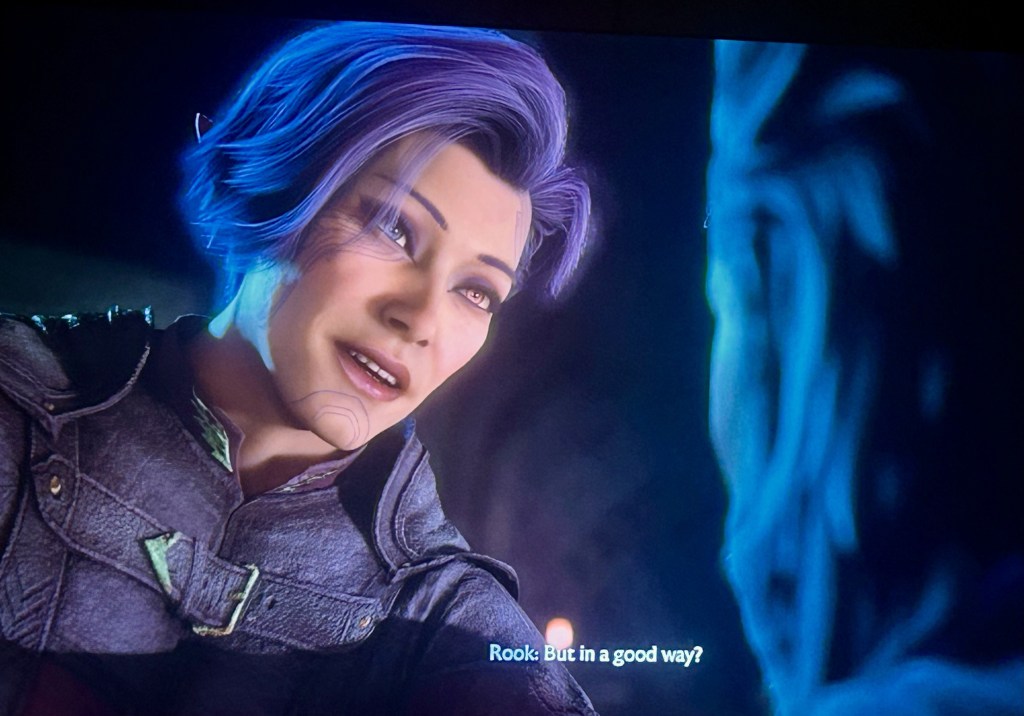
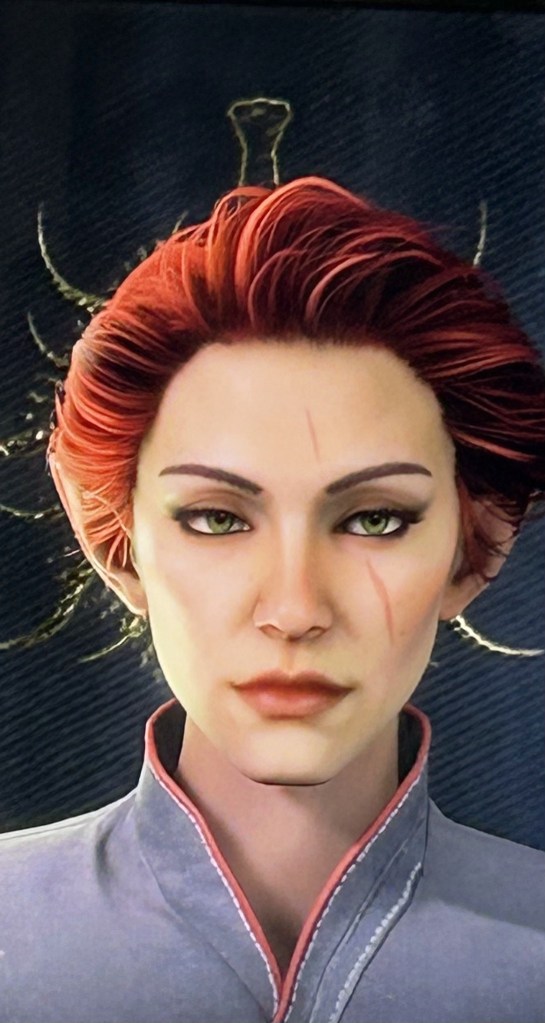
They are only likable. You will only befriend your companions. You can choose different dialogue options between nice, sarcastic-ish, or brave, but none are evil. None are truly confrontational. And that limits the replayability. I chose to play as an elf mage from the Grey Wardens. That’s her, Peri, above. She was sarcastic most of the time.

Then there’s The Story.

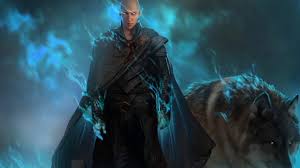
At the end of Inquisition, we learn our companion Solas, is an ancient elf, a virtual god, aka The Dread Wolf, who wants to pull down the Veil that separates the mortal world from the magical one beyond. He erected it, to stop his fellow gods during a civil war, but it sapped the elves of their immortality and left them vulnerable to being overthrown, the loss of their culture, and eventual enslavement. They are among the lowliest of citizens in this world.

Solas wants to save his people, but at the expense of the rest of the world. Before the end of game three, he disappears, and it is up to the Inquisitor and their allies to save or destroy Solas and his plans. So in game 4, we open ten years later on his trail. He is making his move (finally), and we interrupt it, unleashing chaos as the gods he was keeping contained are now released. Wah wah.

The problem is, all the threads that were developed prior to game 4 no longer seem relevant. Elves were leaving in droves at the end of game 3 to join the Dread Wolf’s cause. There is no mention of them in the new game unless they are among the elves now living in their old home of Arlathan Forest, but that’s not clear. Also, the plan seemed more grandiose than just a relocation program.

Finally, there were comics and short stories that introduced new and familiar characters and story ideas, and for the most part, they are all absent from the game. Where are the talking darkspawn? My problem with the story is that they flipped the script and changed the focus on everything we had been building toward.

Where are our old Friends?

Where is Merrill the elven mage who was trying to unlock the secrets of the mirrors known as eluvians from game 2. The mirrors have played a role across all the games, but more predominantly in 3 and 4. Given her race and experience, where is she?

Our first encounter with the Qunari race is a character named Sten in game 1. Within one of the first comic series, he becomes the Arishok, a leader of the Qunari people. Given that the Qunari have now invaded a number of countries beyond their own, I was hoping he’d make an appearance again.

Game 3, Inquisition is a big game with a number of world shaping decisions, including the ability to influence who will be the next head of the church, The Divine. Three of your companions are being considered for this important role. This was a character that absolutely should have made an appearance since the world is pretty much going to sh*t. There has been cause in the past, and it’s been threatened, to call something referred to as Exalted March to quell uprisings and the like, and there’s no time like the present for their intervention.

Your protagonist from game 3, the Inquisitor does make a few appearances, which was absolutely necessary given their relationship with Solas. For my first game 4 PT, my Inky had romanced Solas so I could see what would happen if and when they were reunited. It’s through them we learn that southern Thedas, where we spent the last three games, is falling to all the chaos. There’s too much to get into with the Warden-turned-Hero of Ferelden and the sitting monarch of Ferelden from game 1 because of the choices and the post game title cards that hint at the future to some degree. Whoever you helped make the King or Queen will make a brief appearance in game 3, but with so much happening, and the regions we helped now under threat once again, where are they?

Then there are those like Fenris, an escaped elven slave from Tevinter imbued with lyrium tattoos due to a magister’s experimentation. He got his own comic series, and because he’s an elf, from a country we’re exploring, I expected to see him again. Where are any of the characters from game 3 that offer to help you track Solas down, like Cassandra? The Iron Bull – your own personal Qunari spy? Sera and her network of Red Jennies? Where is Briala, the once-lover and confidante of the Empress of Orlais, who was part of an underground movement to help the elves? So many missed opportunities.

And side note, I would have paid double if I knew I was getting my cinnamon roll, Alistair and my lion, Cullen back for any length of time.

The Dialogue is Weak.

As an inspiring professional writer, this is where I took the most offense. I wish I had some examples, but I remember often thinking, “Really?” They would over explain things, or reiterate a concept too many times, as if we didn’t remember, and this is why I believe it was written for a younger audience.

Where is the Love?

I endured a disappointing, poorly developed romance with the adorable Antivan Crow, Lucanis. He really got short changed. I met the voice actor at SD Comic Con, so cute, and Lucanis’s appearance in one of the short stories included in the book, Tevinter Nights is a highlight, which is why I was initially drawn to him. If you appreciate a slow burn, then this is for you, but compared to the previous games – the conversations that could be had, the butterflies when your love interest looked at your character a certain way…swoon – that didn’t really happen, except like once.

I’ve only pursued the one romance option so far, so I can only speak to how this one was written. I just wish they would have given him a little more attention.

And a side tangent to this, you could always speak to your companions in the previous games whether you were in camp or walking about. In this game, you could only have a conversation, and sometimes, I wouldn’t even call it that, when the companion has an exclamation point over their head to instigate the convo. Why are we taking steps backward?

That’s it? No DLCs?

Given the culmination of four games, I felt this installment ended rather abruptly. So much had happened, so many countries were affected by the events, and once the main threat was neutralized, the game just sort of ended. There was a little indication of how the world was moving on, but it felt shallow. Then it was announced that there wouldn’t be any more. No DLCs, nothing to wrap up loose ends. A BioWare writer “reassured” fans that Dragon Age isn’t dead, because it stays alive through their own work, and continued by saying that Dragon Age belongs to the fans now.

I’m sure that was meant to sound positive, but it left fans with sort of mixed feelings. Years ago, for the third game in the Mass Effect series, BioWare created a DLC specifically as fan service, and now we can’t get some sort of tie-in/wrap up/love letter? It just leaves me feeling slighted by a franchise that I have devoted a lot of time to, in addition to the emotional and financial investment.

Not topic related, but I had to share this.

Okay, and finally, just a few random annoyances: What happened to building our own gear and weapons? What happened to being able to color change not only our, but our companions’ gear? Why don’t our companions take damage? Why don’t we have to use lyrium vials or injury kits? Why do the dragons nose dive at you?

Oh my. That’s a little more “con” than I wanted to share. I usually like to end my posts on a positive note, but this is just to long at this point, so I hope you’ll stay tuned for the final part of this now series, The Pros.