Do Your Homework

Let me be an example to all.  Heed my warning.  Do your research thoroughly before you start writing.

I was polishing my first screenplay, getting it all pretty for submission season, when I discovered I had made a rather large error.  In trying to create a more compelling version of my female protagonist, I did a little research into women’s roles in Ancient Rome and learned something that would change everything.  Ancient Rome was not what I thought.  I allowed my ignorant assumptions, probably based on remnant memories of movies/tv/fiction past to create a world that was a bit on the inaccurate side.  As I have commented (numerous times) before, I have always struggled with the third act.  I have rewritten it so many times, and I’m still sort of displeased with it.  I thought if I could change a few character details, maybe that would give me a different perspective on how to alter the finale.  So I went into research mode.  I’m not sure if I should kick myself now, for not having done this sooner, but nonetheless, here I am…again: major rewrite in progress…*Sigh

Desert

Oh, writing.  Why are you so painful some days.  On Monday at my writer’s group, I did some “reworking” and deleted everything I wrote.  Two hours had passed and I was no closer to solving my dilemma.  I’m going on two weeks with no new developments, and I have a week and a half before I want to start submitting it.  Tick tock.  Tick tock.

There’s this idea that in order to get the story out, you just write.  You don’t worry about it being good or bad, you just get it on paper.  We discussed this on Monday, and I agree, but this isn’t currently where I am on this piece.  It had its days of being “bad”.  Until a few days ago, I loved the first two acts (and I still do).  I just wanted a way to wrap it up nicely.  Stupid period piece and your historical inaccuracy.

My tip of the day: Do your homework.  Seriously.  Don’t follow in my footsteps.  Unless you really know what you’re talking about, don’t rely on fictionalized accounts and a faulty memory, do a little research.  I love doing research, so I’m quite surprised to learn I was not more thorough.  Create special folders on your computer of sites you visit for information as a quick reference tool for each story.  Read up on different aspects (time period, male/female roles, political climate, cultural influences, scientific advancements, etc.) of the story you’re telling, and you may be surprised to learn something that changes your story for the better (or worse, for your characters anyway, depending on your tale).

Now I must go and stare blankly at my script in the hopes “M” will come to life by some sheer force of will.  That picture above is the equivalent of my mind at the moment…

I hope your day goes better.  Wishing you all the best!

Too Much Information

Earth&TechDoes anyone else find the endless stream of information almost nauseating? For some of you, who may be a little too young to remember a time before the internet existed (yes, I’m going to sound like an old woman reminiscing about the “old days”), we didn’t always have every little bit of information available at our fingertips.  Sometimes we had to wait until the next day to read about some event in the paper or see it on the news.  We had to go to the library for research.  We taped shows and maybe waited a few days, maybe a whole week, to watch it.  Not everything required a “spoiler alert” label, because the time to actually read or watch something before everyone started talking about it could be months.  All the insight and information from so many sources is sometimes overwhelming.  The constant updates about every small detail numb the senses.  And yet, I know more about things because I have access, I have this window.  It’s a catch-22.

This whole rant was sparked because I saw yet another update in regards to the new Star Wars movie, its shooting schedule.  Who needs to know this?  The film hasn’t even begun production and I’m already tired of hearing about it.  And I’m a Star Wars fan.  My sister does not use the internet to the same extent that I do, so for her, most things are still a surprise.  And I try my best to keep the many things I learn a secret to keep her in a state of awe.  At least one of us should be able to enjoy the pleasures of remaining in the dark, to harken back to the days before the endless stream began.  To be surprised.  Ah, those were the days.  The phrase ignorance is bliss is truly difficult to maintain in such times.  Do you know how long I’ve been holding my tongue about Game of Thrones’ Red Wedding?!  Or *SPOILER ALERT* that they killed Brian on Family Guy?  We’re a little behind on everything in our house.

We, as a whole, are becoming too accustomed to instant gratification.  If an internet page takes too long to load, we become incensed.  If a blog is too long, we skim or skip it all together.  So many creations that are supposed to aid in making our lives easier and in turn giving us more time, only make having more time a waste of time.  And I still never feel like I have enough time.  I have a love-hate relationship with the internet.  It’s a window to the outside world, but also an enormous time sucker.  I love that there are programs that make it extra easy for me to get my story down without wasting reams and reams of paper.  I can edit as I type.  I can find information to help my story in the blink of an eye.  And yet…

How does this relate to writing, you may ask?  Well, there are a few things to keep in mind.  Our audiences are much smarter and worldlier than ever before.  They have access to so much, but are also developing shorter attention spans.  So we have to entertain them.  We have to grab their attention and make them want to invest their time.  As writers, we have a wealth of material to draw from on a regular basis; being exposed to a variety of newsworthy topics, cultural differences, scientific discoveries, and any number of amazing facts about our world.  I recently heard that scripts should be “easy reads” (breaking up blocks of text and giving it the appearance of a quick read) because whoever is reading it already has a lot on their plate, so they’re more inclined to give yours a better look if they think they can fly through it.  Ugh.  Really?  I feel like sometimes we’re dumbing ourselves down.

So my tip of the day: Continue to be passionate about your writing.  Write the story you want to tell.  That speaks volumes, but just be prepared.  You may have to alter a few things so it “looks” better, but who knows, maybe you’ll end up in that endless stream where everyone is talking about you!

Best of luck!

What is Saleable?

I’ve been reading a lot of articles lately and this one word keeps popping up — saleable (which means fit or able to be sold).  This absurd sounding word is actually resounding throughout Hollywood right now, according to numerous sources, because your work should be saleable.  No kidding.  Isn’t that, in part, why we’re doing this?  As artists/writers, we write, and write, and write, sometimes for many years without any acknowledgment, let alone any monetary reward, but that is the goal.  So when I hear this word it sort of makes me laugh, because what they really mean is that they want something marketable, something that will bring in a large return.  Apparently production companies are a little nervous, and sales have been dropping.  I love hearing that and then seeing the weekend box office of films slated for release.  So many continue to come out that I can’t believe found funding; remakes, endless sequels, and reinventions.  It’s hard to be a writer with interesting stories gathering dust while a slew of “mediocrity” (this is not meant entirely as an insult, because who doesn’t love a bad movie from time to time?) finds its place in the world.

InsideMyHead

So what does “saleable” have to do in relation to your work?  My honest opinion is nothing.  If you believe in yourself and your art, if you’re passionate about what you’re writing, then someone will take notice.  I remember this great piece of advice I got once — Don’t chase trends.  Why?  Because by the time you get your work in front of someone that might be able to do something with it (like get it published or sold to a production studio) that trend will be over.  Write what you’re passionate about.  If it happens to be a story in a genre popular right now, that’s fine, because in a few years that trend will come back around and you’ll already have something ready.  Obviously, if your story is different than all that other stuff out there, all the rules go right out the window.  But, remember this, when you’re starting out, write about those things you love.  It’s your time, your energy, your lack of sleep, going blind staring at the computer, praying that someone will notice your work, starving because you don’t want to work at that crap job anymore — so why would  you want to waste all that on something you don’t even care about?  You should love your characters.  You should love your story.  I hope it makes you laugh out loud, or well up with tears, because it is that kind of passion that will help you sell it.

Best of luck to you all!

Damsel in Distress? No Thank You.

All I wanted to do was write up a nice, little blog about this article I read on LitReactorDystropia: How the Damsel in Distress Has Evolved, but it started becoming this rant on feminism, and how men objectify women, and how women cut each other down.  Not exactly the direction I intended.  As a modern-day woman, I do find the exploitation of women in this day and age infuriating, and I do not care for stories or movies where the woman’s sole purpose is to be rescued, to cause the ensuing chaos, or to serve no purpose other than to be eye candy — we’re more complex than that, we offer more than that, and it’s time to stop putting us in those boxes.  I’m tired of terms like “bitch” or “slut”.  Just because a woman is strong, vocal, not ashamed of who she is, and not afraid to stand up for what she believes in does not make her any of these labels.  Let’s just get rid of the labels all together.

Sydney2Buffy w:stakeNikita2

I read somewhere that writer Damon Lindehof, co-writer of Star Trek Into Darkness, regretted writing the scene where actress Alice Eve, aka Dr. Carol Marcus, flashes her underwear for no reason other than to flash her goodies.  She’s a scientist, a weapons expert, and yet we have to show her practically naked for what reason?  C’mon.  Fanboys weren’t the only people in the audience.  This is why finding writers that actually create complex female characters is so refreshing.  Some of my favorite shows ever host a female lead; Buffy the Vampire Slayer, La Femme Nikita, and Alias.  All these women, besides being kick-ass, were great characters.  Game of Thrones is wonderful for this reason as well.  Daenerys Targaryen, played by Emilia Clarke, has had a wonderful character arc from frail, young girl to the leader of an army.  Cersei Lannister, played by Lena Headey, has said in interviews that people have called her a bitch to her face, as if she is her character.  If the actions of her character were done by a man, no one would have anything to say.  I’m also a fan of Lost Girl, that not only has a wonderful lead, but interesting side characters as well.  I like the direction TV is going with women, creating strong characters without cliché.

I love the show, Sherlock and its lead, Benedict Cumberbatch, but I have to wonder what sort of reviews  it would get if they had made Sherlock a woman.  Why is it so shocking when a female character is an alcoholic or has some eccentricities?  Why is it absurd to vocalize that not all women want to be mothers or somebody’s wife?  Why do women have to be pigeonholed into a certain category where men feel secure?  What year is it?

Then I found this article by the New York Film Academy about Gender Inequality in Film.  It’s kind of shocking, considering we make up half the population.  As a woman writer, I write about female protagonists with a strong, supportive female cohort.  Two of my scripts are almost entirely made up of women.  I’m not trying to make a statement, I just think that the number of women represented in literature and film is dismal, and when a strong female character makes her way on the scene, she is usually met with resistance.  Have we not, as a society, moved past this point?  I may have been raised by Disney princesses, and believe me when I say they made a huge impact on me, that doesn’t mean those are the types of stereotypical women (maybe just variations) I want to continue to go out into the world.  Little girls deserve more realistic diversity.  They need role models, but they also need to know that whoever they turn out to be is okay.  And the only way they can know this is if we, as writers, make those types of characters available.  Don’t take the easy way out — write interesting characters!

Okay.  I’m going to stop right there, because this did turn into a rant.  Ah, well.  Hopefully, it was enlightening.

Have a great week everyone!

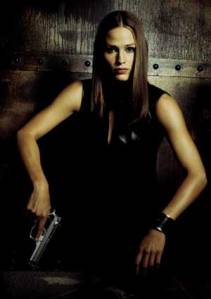
*Images: Sarah Michelle Gellar of BVS, Peta Wilson of LFN, and Jennifer Garner of Alias.

Taking a Little Respite

Some days are rough.  Not just for writers, but for people in general.  There are just so many days when you feel like all you’re doing is swimming against the current.  Being an adult is hard.  So much for high school, even college, preparing us for that wake-up call (no, this is not new to me, I’ve just been reminded again recently).  As for being a creative, those days seem doubled, maybe even tripled.  We have our regular lives, then our creative ones, then the professional ones where we try to get people to notice the creative one.  It’s a constant uphill battle with some little demon at the top throwing down boulders, pebbles, entire buildings…all while laughing at us and our torment as we try to achieve success.

I took my weekend, then as the new week dawned, I started to feel this dread.  As I wait to hear about a writing fellowship I applied for, the whiff of a negative thought has started to worm its way in and make me question my skills.  I had wanted my first screenplay entered as my “sample”, but it wasn’t ready.  I love the script I did submit, but the story is not as unique as the other, although it has spurred me to write two sequels (there’s just so much to write about), and now I’m wondering if that has inhibited my progress in some way.  See, there’s that little demon, working his evil magic.  I realize I haven’t really started to put myself “out there” as a writer until this past year, and the knocks have taken a little getting used to, but as the days compound, doubt creeps in, and I think stepping away from it all to get my head back on straight is the best remedy.  Besides, most people get sick days, so should we.  And then I found out about another approaching deadline, and right now my mind is a blank.  Six weeks…and I’ve got nothing.  And then there’s this potential writing job on the horizon…this is when I decide to have a creative/mental meltdown?!  I don’t have time for this nonsense.  Number one on my professional to do list is to treat my career as if it were already my profession.  So it’s time to get back to work.

Needless to say, I decided to take one “mental health” day.  I completely vegged; no cleaning, no worrying, not even a glance at my computer.  As this blog is meant to serve, in part, as a journal, I’m putting this out into the world and as a reminder to my future self of the times endured and overcome.  Here are a few quotes to help those of you struggling as well.

“Many of life’s failures are people who did not realize how close they were to success when they gave up.”  — Thomas A. Edison — So don’t give up!

“The only thing that stands between you and your dream is the will to try and the belief that it is actually possible.” — Joel Brown — Believe in yourself!

“If opportunity doesn’t knock, build a door. “ — Milton Berle — Create your own success story!

GoldenCKey

You may have noticed I have a thing for keys.  I like the metaphor they represent.  Let it be a reminder that we hold the keys to our success.  Throw rocks back at those demons, whether in reality or in your subconscious, and persevere!

Best of luck to you all!

Novels vs Screenplays Pt. 2

FlyingLettersSo continuing on…I recently added my own insight into a discussion regarding the nature of screenplays.  A writer was finding it difficult to follow the screenplay formula and not leave the reader confused.  Screenplays involve a lot of blank page, little description, and subtext to limit dialogue…a whole, action packed story, all in under 120 pages.  As I stated in the previous post, 1 page of screenplay roughly equals 1 minute of screen time.  So, those romantic comedies that are always around the 1 1/2 hr mark are about 90 pages.  Again, there are exceptions to the rules.  That’s why the phrase “rules are meant to be broken” is so well loved among screenwriters.  But, you have to learn them first.

When I started writing, I tried writing longer stories.  What I found inhibiting was the attention to details.  Where does the story fall among all those descriptions and idle moments.  When I was introduced to screenwriting, that it was it for me.  Don’t misunderstand, I love to read.  Getting lost in a book is a great way to spend time.  But, as a writer, I find I’m more effective in screenwriting.  Since I began screenwriting, I tried my hand at transferring one of my ideas to novel form, and it took great pains to switch the brain to that mode.  But here’s something I learned along the way.  Because I had to expand the story, I learned more about my characters, their thoughts, their feelings, and the plot became more involved which in turn caused me to rewrite the screenplay.  The two worked better together, in this case.  (This may need to be another topic of discussion.)

So here are a few things to keep in mind if you’re writing a screenplay:

1) Description should be bare minimum.  Only those things that add to the character should be mentioned.  The director and casting agents will decide on who gets cast in your roles, so don’t over-describe what they look like.  Same goes for clothing.  A few references to add to the character are useful, but can be eluded to easily without spending a lot of time on it.  If your character works in the fashion industry, most readers will have some understanding of what type of looks are involved in that world.  And you only have to mention it once when you first introduce your character.  I have an “angsty” teenager in one of my scripts and I just mentioned that she wore all black.  That’s it.  Our imaginations can conjure up an image without going into great detail.  Sometimes locations will be altered, for multiple reasons, so don’t waste time with a lot of description here either.  But let’s say your character randomly quotes movie lines, then perhaps you can write that they have old movie posters around their apartment.  But don’t tell us what color the walls are.  If your characters go to a country house in England, again, we can pretty much imagine that.

On the flip side, if your story takes place in an “alien” world (and by alien, I mean anything out of the ordinary.  It could be a secret military base, or a parallel world), then yes, you may need to describe things a little more in detail, but try not to go over the top, because Hollywood readers (from what I’ve heard) will sometimes just skim over long blocks of description because it takes away from the flow.

2) The same is true of dialogue.  Screenplay dialogue does not always mimic real life conversations.  You can leave out traditional conversation fillers like “hello”, “how are you”, “have a good day”, etc., again, unless it’s adding to the subtext.  Maybe we’re meeting the villain for the first time and he’s unusually cordial and it makes everyone uneasy.  Or a couple has just had a fight, so their conversation is a little stilted as they try to get past the tension.  There’s a phrase to remember in writing, “Enter (the scene) late, Leave (the scene) early”.  Think about it as if you were attending a party.  You get there an hour after it’s started.  You don’t know what happened before you arrived, so some of the conversations you overhear are just strange.  When you leave, the same thing can be said.  The last line of dialogue you hear uttered may leave you questioning what just happened.  Not everything needs an explanation.  Maybe it’s foreshadowing.  Maybe we just learned how other people view our character.

3) Try to conserve words.  If you can use one word instead of two and achieve the same intent, do it.  120 pages isn’t a lot.

4) Lastly, over describing action is unnecessary as well.  I remember reading once that in the film Crouching Tiger, Hidden Dragon, there was an elaborate fight sequence that was written only as “They fight”.  As writers we see the entire sequence in our heads, but leaving out some of the details does not necessarily mean it will weaken your story.  Obviously, you can write a little more than that, such as, “a fight that ensued through every room” or “an intense fight that seemed to last hours”.  A film involves so many more people, all with specific skills, and it is this knowledge that allows you to just tell the story.

This was a long one…goodness.  I hope it was helpful!  If you have any questions, feel free to send me a message.

Best of luck and have a good weekend!

Novels vs Screenplays

FlyingLettersI recently added my two-cents to a discussion about screenwriting and was compelled to talk about it a bit more.  This particular writer had posed a question about why screenplays had to be a certain length because he felt that his story lost something and might be confusing if everything he wanted was not included.  If you’ve written longer prose the switch to screenwriting can be a difficult transition.  Screenwriting is not like novel writing.  A novel can sometimes be upwards of a thousand pages, where a screenplay, especially for new writers in the field, should never exceed 120 (1 page roughly equals 1 minute of screen time).  Yes, there are exceptions to this rule — Gandhi, Malcolm X, Braveheart, Schindler’s List, Saving Private Ryan, to name a few — but they’re all historical, epic, so I can imagine if you have one of those in your arsenal, the page count rule will not apply.  But good luck selling that right out of the gate.*  Historical usually equals costly, and a “first time” writer will be hard pressed to sell something like that without a track record.  Now, again, there are always exceptions, so if you have an amazing story, go for it!  If it’s that good, someone will take notice.  *A disclaimer: I am not an expert.  I am a writer new to the world of Hollywood.  I have just started to make my rounds in the industry, have read a lot, and am partially regurgitating what I’ve learned so far.  Please take my ramblings as just that, ramblings.  I am only trying to impart the lessons of those who have come before.  I feel it’s important to know the terrain before heading out into it.

A screenplay is a blueprint for the film.  There are two mottos by which a screenwriter lives (there are more, I’m sure, but these are the big ones) — show don’t tell & write only what can be seen.   Not all the details need to be included.  If the screenplay is based on a novel many details can be excluded simply because there is source material to refer to.  Novels can spend entire chapters setting up characters, locations, and the premise, where a screenplay is supposed to have all that within the first 10 pages.  Novels can delve into a character’s inner dialogue, but in screenplays, unless it can be shown, you can’t do it.  And from the things I’ve read, most industry professionals don’t care for voice overs which could be considered a quick fix for faulty storytelling.*  *Again, refer to the above disclaimer.

I understand this particular writer’s frustration, but where I find screenwriting liberating, as it is formulaic and has rules (which of course are meant to be broken), to others it might be too restrictive.  For writers interested in exploring screenwriting, I would encourage you to find a screenplay of a movie you like and compare the two.  Even better if it was based on a novel as you can see how different all three can be.  Here is a site that lists where to find mostly free downloadable screenplays.

To be continued…I have a few more “pearls of wisdom” to impart.  Oh, yea.

Wishing you the best of luck in your writing endeavors!

Writer’s Pet Peeves

TypewriterFontWriterMore often than not when I tell someone I’m a writer I receive the response, “I have a great idea for a story!”  And sometimes they add, “Maybe we could talk about it…”  Why?  Have I mentioned something about running out of my own ideas?  Has my well run dry?  This may indeed be one of the first lessons every writer learns…everyone has an idea.  I’ve had old friends, people I hadn’t spoken to in years, call to ask if I wanted to write these interesting ideas they had because they had learned that I was now a writer.  I understand their enthusiasm for wanting to share their story, sometimes it is indeed interesting (I mean, we all have stories…you tell them at parties while standing around the kitchen with a glass of wine), but (and that’s a big but), I feel almost like they’re trying to validate not just what I do, but themselves as well for having lived with this glimpse of a story for as long as they have.

Maybe this sounds a bit callous, but in the end, I think their eye is on the possibility of money.  Novels can have hordes of followers and then can be turned into movies, and writers have a level of celebrity now that I don’t think existed prior to the internet.  I write because I have to.  I don’t want to do anything else, I’ve tried other avenues and this is it for me (and what would my poor brain do if I didn’t do this?  Hmm…), and hopefully, in time, the money will come, but that’s not why I do it.  This is my lot in life.

I was reminded of this pet peeve when I read an article about The 6 Things Only Writers Understand About the Writing Life on the site The Write Life.  Here’s a snippet from this particular pet peeve:

I always feel a little disrespected when someone brings up their story like we have something in common.  Do they think my job is just me wistfully going about my day with big ideas?

If you find yourself cornered by someone else’s half-baked dreams, try to steer the conversation toward the reality of your career and lifestyle to help them understand that you’re more than fantastical ideas. Explain what your day really looks like, and the deadlines and commitments that drive your work toward the finish line.

And usually we have to try to find time for our passion in between family, work, friends, and other commitments.  So stay strong fellow writers!

I wish you all the best of luck and a productive weekend (if you’re working and not “taking the weekend” like I’ve suggested)!

*Image from DL Koontz site

Sheer Panic

There is nothing like the panic that strikes you when you think something is submitted and complete and then you receive an email saying “Incomplete”.  Sheer panic.  Especially when five weeks have passed and it could be one of the biggest breaks of your career.

I submitted an application for a fellowship at a major studio that I am truly, wildly hoping to be accepted for.  I still have a month until they start reaching out to the hopefuls, and I received that terrifying email last night.  Two sentences that dangled on a previous page of their legal document needed to be included, and I had missed them.  I didn’t need to initial or sign by them, but they needed to be included none the less.  Pushing that send button was one of the most tense moments in my writing career so far.  There were so many components to be gathered and I had reviewed each item multiple, multiple times, so I was horrified that something went amiss.

I have no words of wisdom to offer today.  I’m not sure if this is an omen or if there is some lesson to be learned.  Actually, strike that.  I think the lesson is that sometimes you are so invested in something that you may fail to see the smallest of errors.  That’s why having as many people read your work before sending it out into the world is so important; to catch typos, grammatical errors, dangling sentences, etc.  Stepping away from a project for a short time may help you regain some perspective, that is of course unless you’re on some deadline, to which I suggest finding an amazing proofreader you can really rely on!

Too often I see errors on legitimate (magazine, informational, newsworthy) sites and even writer’s pages that make me cringe that people are not taking the time or necessary steps to provide accurate information.  The “information age” and the speed at which people expect information to be processed and delivered is making for sloppy work.  Everyone needs to take a breather (and not rely on autocorrect).

I apologize for the little rant.  I’m still a little shaken from that email.  And now I will send out the good vibes — Hope everyone is having a great week!