Writing Prompt #25

If any of the writing prompt images inspire you to create something, I’d love if you’d share the link (if you posted it to your own blog/site).  I like the idea of creating a community, inspiring each other, and being creative.  What do you think?  Should we make the images more of a weekly exercise?  Let me know your thoughts.

This one is in keeping with my inspiration for the rewrite…

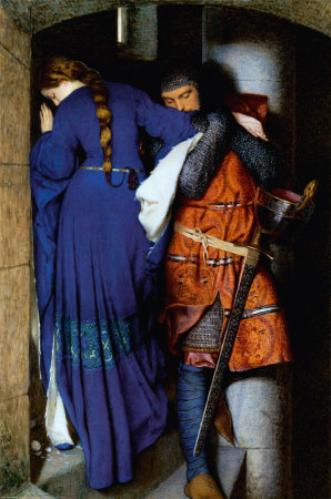
Writing Prompt #25

Lovers Meet on the Castle Stairs


Happy Writing!

A Writer’s Life

EditingVictory!  Last night I had a small breakthrough on the rewrite, and I am starting to fall in love again.  I know I’m not alone in feeling a little love loss when a story you’ve poured yourself into stops loving you back; the hours invested, the sleep lost, the tears, the borderline mental breakdown…I’ve complained about this one long enough, and I don’t like the feeling that a story and characters that once brought me such pleasure could turn out to be the bane of my current writing existence, especially when people, whose opinion I trust, tell me how much they like the story.  It makes me wonder if I’m thinking too much, trying too hard, or am afraid?

I know for a fact that I think too much.  I over-think everything.  But as writers, we all want our stories to be the best they can be.  So trying to think of every possible story thread or outcome is just part of the trade.  Wondering about every facet of the story is just what we do.  And I know I have to get out of my head, more often than I do.

As for trying too hard in relation to my writing, I don’t think such a thing exists.  In regards to becoming a writer, is there any other way?  I’m a new writer, and a woman, trying to make it in Hollywood, so what else am I going to do?  The Writers Guild recently released this article about the state of women in the industry, and it’s a little bleak.  In an already tough business, the uphill battle just got a little rockier it seems.  I need my stories to be compelling.  I want them to be recognized for what they are.  And I want the fact that I’m a woman to be irrelevant when looking at my scripts, although it will be clearly evident because I’m a bit of a feminist and I write for women primarily, but you know what I mean.  I am trying too hard because I want to succeed.

Then there’s the possibility of fear.  Fear is an enormous detriment to a writer.  If I’m honest, which I will be here, I don’t feel fear in regards to my writing.  I relish the blank page.  It’s an opportunity to create new worlds and escape into adventure.  I don’t fear endings.  Some times, after spending so long with certain characters, it’s hard to say goodbye, but I like the idea of moving forward and creating a body of work.  But there is one thing, the fear of success.  The unknown.  We get comfortable in the daily struggle, the routines we’ve created, and lives we’ve built around this dream.  This may seem strange, but all the years building up to the next stage in the journey makes me nervous at times.  Am I prepared?  I think, not just as writers, but as people, when we dream about something for so long, the idea of actually getting what we want can cause fear.

So, back to the breakthrough.  I decided to take a different approach to my writing and use some of the tools I’ve discovered along the way.  Blake Snyder’s Save the Cat (this is the link to the website and information, but there is a book too) is a great resource for screenwriters, but I think all writers could use some of the techniques to help their story.  Blake designed a checklist, all the components needed in a screenplay.  As my rewrite is an entire perspective shift, I’m changing protagonists, I needed to get into the head of the new lead character.  This is someone I know well, but until I sat down and started writing out her journey, all that time spent in my head was time wasted.  I can think on it all I want, that over-thinking thing I do, but until I sat down and physically worked out the details, I was never going to move forward.

Maybe there was a little fear, actually fear might be the wrong word, perhaps anxiety is better to refer to my feelings about this script and its necessary rewrite.  The love had slowly melted away under the constant scrutiny and struggle to get the third act right.  This is a story I have been working on for a long time, and when I had that light bulb moment to change the perspective, it was almost like I was writing a new story and I was afraid of what it might do to the original idea.  Maybe this is why I’ve been reluctant and dragging my feet to actually attempt the rewrite.  But like I said above, “fear is a detriment”, and I can’t let that hold me back from moving forward.  So, as I sat in my writer’s group last night working out the details, I had a glimmer of the love that drew me to write this story in the first place.  I made a mental decision to look at this new rewrite with a positive attitude, and I think that worked.  As I discussed the idea with a fellow writer later, I felt better and more hopeful with the idea.

So I throw this out to you my fellow writers…what obstacles do you have in your writer’s life?  How do you overcome them?  Or are they what drive you to succeed?

I wish you all the best in your endeavors!
Helpful Site: Write to Done

HelpfulTipsI was bouncing around the internet, instead of writing, because I was still enjoying my morning tea and didn’t quite have the brain capacity for anything beyond reading emails and Facebook statuses, and luckily, I found something of use amongst the nonsense, a website called Write to Done.  They offer a section for submitting material as a guest blogger (here are their guidelines), they have a free book, and over 200,000 monthly readers, so it might be worth a look-see.

Happy Sunday!

Make Your Own (Writing) Rules

AntiqueKeyThe other day I posted a link to a site called Literary Rejections with a list of author’s 10 Rules of Writing (Henry Miller and A.L. Kennedy were probably my favorites).  I decided to create my own, as I said I would, and after some editing rounded out the number to 20.  I’m putting this out into the world in the hopes that it will not only help me, but other writers.

I’m on the email lists of various writing sites and I get so inundated with information that some days I feel like hitting the spam button and never looking at their “helpful advice” again.  There are so many people telling you what you should and shouldn’t do and sometimes they’re contradictory…so what is one to do?

Make your own rules!

Now obviously, there are some rules of writing that can’t be changed.  Screenwriting has a very specific structure, I can’t change that, but my writing style, etc. is left up to me.  We all know the conditions we like to write in and when, but like my To Do List posted on the wall, sometimes it helps to see those guidelines visually.  We might accomplish more when there’s a physical reminder staring at us.  So here are mine –

  1. Language does not always have to wear a tie and lace-up shoes. The object of fiction isn’t grammatical correctness but to make the reader welcome and then tell a story.
  2. Whether it’s a vignette of a single page or an epic trilogy, the work is always accomplished one word at a time.
  3. Hold the reader’s attention.
  4. Write whatever way you like. Fiction is made of words on a page; reality is made of something else. It doesn’t matter how “real” your story is, or how “made up”: what matters is its necessity.
  5. Work on one thing at a time until finished.
  6. Work according to the program and not according to mood. Stop at the appointed time!
  7.  When you can’t create you can work.
  8. Keep human! See people, go places, drink if you feel like it.
  9. Don’t be a draught-horse! Work with pleasure only.
  10. Forget the books (screenplays) you want to write. Think only of the book (screenplay) you are writing.
  11. Write first and always. Painting, music, friends, cinema, all these come afterwards.
  12. Write a book (movie you’d like to see) you’d like to read. Don’t write for a perceived audience or market. It may well have vanished by the time your book’s (screenplay’s) ready.
  13. Be ready for anything. Each new story has different demands and may throw up reasons to break these and all other rules.
  14. The reader is a friend, not an adversary, not a spectator.
  15. You see more sitting still than chasing after.
  16. You don’t know the limits of your own abilities. If you keep pushing beyond yourself, you will enrich your own life.
  17. Defend your work. Individuals will often think they know best about your work. When you genuinely believe their decisions would damage your work – walk away.
  18. Defend yourself. Find out what keeps you happy, motivated and creative.
  19. Remember you love writing. It wouldn’t be worth it if you didn’t. If the love fades, do what you need to and get it back.
  20.  Use the right word, not its second cousin.

I encourage you all to make your own list, and as always Best of Luck!

The Plague & Some Rules of Writing

QuestionMarksI’ve been trying to write some in-depth blog, but nothing seems to be coming out the way I want in part because I have “the plague”.  My mind is currently consumed with a hundred questions like, “When do you know your story is finished?”, “Am I making the story better by changing the perspective?”,  “Am I only changing perspective because I’m not the person I was when I started this story so I want the focus to change?”, “Should I get a writing partner, and how would I go about that?”, “Should we move to save money?”, “Should I figure out how to outline better?  Because I really don’t like to outline, but it may be more productive, except I like the journey my characters take sometimes without any supervised attention, but then again maybe this is why I’m having trouble.  Nah, it can’t be an outlining issue.”, Should I go back to a “real job”?”, “Is writing a mermaid story only prevalent now because I know they’re making a live action Little Mermaid?”, “Should I try to sell my fairy story to the Japanime world?  Because I really like the way those Final Fantasy characters look.”, “How do I get into video game writing?”, “Which of my new writer friends can I talk to about this story so I can just finish it already?”, and countless others…

This is one of those days I can imagine all writers have.  Let’s call it Doubt Day, or Overwhelmed Day, or I’m Over It Day, or I Need To Get Back Into My Routine Day.  The only way to persevere, I suppose, and have been told repeatedly, is to keep moving forward.

Maybe this will help…a list from Literary Rejections entitled the 10 Rules of Writing.  Well known authors offer their words of wisdom, and why not listen to those who have gone before and been successful?  I’m going to do a little cutting and pasting and create my own list of rules, there are some great ones to adhere to, and I’ll print it up in an effort to stay focused.  Maybe I’ll post it too, so it’s out there for all to see.

I don’t feel any clearer on the subject having verbalized the numerous questions currently plaguing me, but I’m off to a new writer’s group, so maybe I can find some solace there.  If anyone has any suggestions on any of the above, please share. 🙂

I wish you all the best of luck in your endeavors!

A Little Screenwriting Insight

HelpfulTipsI thought I’d share this useful insight with my fellow screenwriters, or for those of you who may be interested in embarking upon this crazy journey.  Script Magazine has a regular column entitled Meet the Reader, and this was their recent post.  The quick overview is – 18 specific things this reader looks for while reading a script, which includes everything from the page count to the feeling that remains after they’ve read it.  I don’t think we should curb our writing with premeditated perimeters, especially during the first draft, but in this tough business, it may be useful and proactive to set ourselves up for success by getting past the gatekeepers aka the readers by understanding what it is they’re looking for.

I hope you find this useful!  And good luck!

2 Writing Opportunities

While on the hunt for writing opportunities, I came across these and thought I’d share.

Collective Lifestyle | Apply to Become Writer – for you freelancers

&

ProLiFic – which looks like an interesting idea and maybe a way to get us to finish our work 😉

Good luck!


A Message for All Creatives

So last night I realized my perspective was off.  While looking for feedback on my last post about finding ideas, a fellow writer suggested I watch this TED Talk from author Elizabeth Gilbert, who wrote Eat, Pray, Love.  It’s an interesting take on the creative process, and a lesson we should probably all take to heart, at least in some regard.  *I won’t spoil any of it by delving into it further, for the moment, but really, give it a watch.  It’s less than 20 mins.

My thoughts yesterday were only that I needed to find more ideas, that I didn’t have enough in my “stockpile”, or the more accurate term I like, due to its deep, dark imagery, “vault”.  Then last night while at my writer’s group, I listened to the twenty other writers in the room discuss their projects, and realized how different we all are from each other.  Everyone in that room was working on something different; novels, screenplays, short stories, poems, the genres differed, the perspectives were biased from personal experience, and the writing styles were all different.  One of my novelist friends cringed when she heard a few of us talking about screenwriting and moved away to find a conversation more suited to her.  We support each other’s work, but don’t talk about it much when we’re together, in part, because of the differences.  So I laughed as she turned away because it reiterated to me that although we share a common passion, writing, we are not in the same boat.

NeverForgetWhyYouStartedI was looking at the work of others and comparing myself to them.  This is where I went wrong.  My life is not the same as a writer at the turn of the last century.  I’m not spending my time in an opium den, allowing lucid hallucinations to dictate my work.  My life isn’t even similar to the majority of the people I was in the room with last night, so why would I ever consider to compare my work with theirs?  Foolish notion…and hence, the perspective change.  As a screenwriter, hearing that someone has written twenty-five scripts should not make me rise to the challenge, because in all honesty, how many of those stories were worth telling?  I don’t want to be a writer that just spews out scripts for the sake of quantity.  I write a story because I have a passion for it, not just to bolster my numbers.

We each do what we can with what we’re given, or hopefully try to.  We all hope to achieve some part of the greatness that others have, but comparing ourselves to them is not only counterproductive, but unnecessary.  We each have our own stories to tell, we each have lived a different life, and it is this variety that makes us unique and incomparable.

I wish you all the best!

Bright Ideas

IdeaLightBulb(jeffbullassite)

Ideas.  Where do they come from?  You’ve got me.

Honestly, I have no idea how my mind works.  The things my mind decides to retain versus what it doesn’t…I don’t know why.  So how could I possibly explain why a line of dialogue or a simple word might instigate an entire thought process that leads me to a new story idea?  I make notes whenever something intrigues me (I’m very fond of the note app on my phone), and I’ve been much better about this as time has gone on because as stated above, I’m not sure I’ll remember it later.  I usually don’t.  Then I become frustrated that I let it slip away.  So I’m always a little surprised when I hear a writer wonder what they should write about.  Isn’t stockpiling a part of a writers bag of tricks?

But on the flip side…I became baffled by some of the things I’ve read about writers doing, such as “idea sessions” where they come up with fifty ideas and then narrow down to a few that seem viable, or hearing about writers that have written upwards of twenty-five scripts.  Then while floating around the internet, I came across Frank L. Baum’s Wiki page, creator of The Wizard of Oz, and discovered what he had done.  Take a quick look at his bibliography, and be forewarned of the feelings of inadequacy that will follow.  When I figured out my portfolio, I was happy that I had eight solid ideas for full-length screenplays with a couple more brewing, but after seeing what some other writers have accomplished…huh, talk about feeling inept.

I keep a notebook with snippets of ideas, lines of dialogue, what-have-you, but even contained within those pages I can’t imagine I have fifty ideas or twenty-five scripts.  I could not write fifteen books based on one idea.  I was thrilled when one of my ideas kept growing and I realized I could write a trilogy and create an entire franchise, but that’s still only three story ideas.  I’ve made a note to myself to seek out idea generator type information, thinking maybe I need help in this area, and saw this article from the aptly named Bitch. Procrastinate. Write. entitled Got no writing ideas? Here’s 11 reasons why.

Then I saw somewhere that a writer’s favorite question is:

What if?

So there’s a starting point.  And another reason I share the writing prompt images.  “If I can help just one writer…”

I’d be interested in getting some feedback on how you all generate ideas, and if I’m alone in feeling this.

Good luck everyone!