Novels vs Screenplays

FlyingLettersI recently added my two-cents to a discussion about screenwriting and was compelled to talk about it a bit more.  This particular writer had posed a question about why screenplays had to be a certain length because he felt that his story lost something and might be confusing if everything he wanted was not included.  If you’ve written longer prose the switch to screenwriting can be a difficult transition.  Screenwriting is not like novel writing.  A novel can sometimes be upwards of a thousand pages, where a screenplay, especially for new writers in the field, should never exceed 120 (1 page roughly equals 1 minute of screen time).  Yes, there are exceptions to this rule — Gandhi, Malcolm X, Braveheart, Schindler’s List, Saving Private Ryan, to name a few — but they’re all historical, epic, so I can imagine if you have one of those in your arsenal, the page count rule will not apply.  But good luck selling that right out of the gate.*  Historical usually equals costly, and a “first time” writer will be hard pressed to sell something like that without a track record.  Now, again, there are always exceptions, so if you have an amazing story, go for it!  If it’s that good, someone will take notice.  *A disclaimer: I am not an expert.  I am a writer new to the world of Hollywood.  I have just started to make my rounds in the industry, have read a lot, and am partially regurgitating what I’ve learned so far.  Please take my ramblings as just that, ramblings.  I am only trying to impart the lessons of those who have come before.  I feel it’s important to know the terrain before heading out into it.

A screenplay is a blueprint for the film.  There are two mottos by which a screenwriter lives (there are more, I’m sure, but these are the big ones) — show don’t tell & write only what can be seen.   Not all the details need to be included.  If the screenplay is based on a novel many details can be excluded simply because there is source material to refer to.  Novels can spend entire chapters setting up characters, locations, and the premise, where a screenplay is supposed to have all that within the first 10 pages.  Novels can delve into a character’s inner dialogue, but in screenplays, unless it can be shown, you can’t do it.  And from the things I’ve read, most industry professionals don’t care for voice overs which could be considered a quick fix for faulty storytelling.*  *Again, refer to the above disclaimer.

I understand this particular writer’s frustration, but where I find screenwriting liberating, as it is formulaic and has rules (which of course are meant to be broken), to others it might be too restrictive.  For writers interested in exploring screenwriting, I would encourage you to find a screenplay of a movie you like and compare the two.  Even better if it was based on a novel as you can see how different all three can be.  Here is a site that lists where to find mostly free downloadable screenplays.

To be continued…I have a few more “pearls of wisdom” to impart.  Oh, yea.

Wishing you the best of luck in your writing endeavors!

Writers Resources

TypewriterFontWriterIn my continuing effort to impart useful information, or what I hope will be considered useful amidst my ramblings, I found a couple of things.

1) The Write Life.  Yep, them again.  They shared an article about finding blog ideas when you can’t stare at the blank screen for one more minute.  Trying to find subject matter on a regular basis can feel daunting, so I hope you’ll find this helpful.  This may not affect you, yet, but it might be a good idea to bookmark the page, just in case.

2) For writers wanting to adapt a novel to a screenplay, you may want to take a look at this free download from Script.  Script often offers this service of free downloads on various topics; blogging, query letters, ebooks, etc.  I would recommend following them or signing up for their notices.  This site offers a lot of information in regards to screenwriting in particular, but some of those skills are easily transferable.

I have been thinking about adding a calendar that would display networking opportunities and deadlines for writing contests.  Useful or no?

Happy Wednesday!

*Image from DL Koontz site

The Zombie Condition

DesertAbout seven years ago, my sister and I moved to a new state and my creative pool dried up and looked as barren as the Arizona landscape that lay outside my front door.  I told people I was a writer, because I hated the inevitable question that all servers/bartenders get, “So what else do you do?” or the yet worse, “This isn’t all you do, is it?” (because to outsiders, waiting tables is like purgatory, but the question is an insult.  It’s a slap in the face that what you’re doing right now, isn’t good enough, and they’re concerned for you).  Oh goodness, that’s a rant for another day.  So, about eight months pass, and I haven’t written a word, and yet I keep telling people that’s what I really do.  I’m a writer.  The thought that plagued me all those months was how could I call myself a writer if I wasn’t writing.  A few drafts in on one screenplay does not a writer make.  I had written more, all through my youth, but it’s not worth mentioning.  And there was a little fear lingering as well.  What other stories did I have to tell?  Then I remembered a quote from Maya Angelou.  “You can’t use up creativity.  The more you use, the more you have.”  Creativity is a fountain.  And as writers we observe.  We are never short of ideas, stored in that so-called “vault”.  So after a little self-loathing and a metaphorical kick in the ass, I got back to work.SwarovskiFaceFountain, Austria

Writing is hard, it’s an art form, and not everyone can do it.  But, if it’s who you really are, then don’t let anything derail you!  That’s my tip of the day.

I was reminded of this condition when I read this funny article today on Script about Writer Zombies.  Don’t let this happen to you.

Best of luck in your writing adventures!

*Swarovski Face Fountain, Austria

Networking Opportunity: Final Draft Meetup & Screening

FDlogoAs I’ve mentioned a time or two, especially for a screenwriter, networking is a necessity.  If you live in L.A., Final Draft offers monthly mixers, Final Draft Meetup & Screening, at The Cat & Fiddle in Hollywood.  This month it will be on November 11th with writer Wayne Powers and a viewing of his film, The Italian Job.  And it’s Free!

Previously I’ve been unable to attend, but I’m going to make a concerted effort to go this month.  If you decide to mingle, say hi!

Hope everyone’s having a productive week!

“Killing Your Darlings”

This morning I read an article about the 3 Signs You Should Give Up On Your Story by K.M. Weiland — 1) You’re losing focus.  2) You lack passion.  3) Your gut says stop.  I think there should be an asterisk at the end of that title that leads you to a footnote that reads *Temporarily, because I’m not sure I believe any story you’ve poured so much effort into should ever really be dead.

Obviously we started the story because we liked it or what’s the point?  If you’ve lost focus or passion, perhaps it’s time to just shelve the story for a little while or retrace your steps to remind yourself why you started the story in the first place.  (I recently wrote about how I was reminded why I started my latest screenplay based on a snippet from Elfen Lied, and it reinvigorated the idea for me.)  If your gut is telling you to quit, it may be your inner voice, the one that always knows, that something has gone amiss, but to me, that doesn’t mean the story is dead in the water.  Sometimes we struggle.  Sometimes we get lost.  Sometimes we get buried, but I have never felt relieved to let a story go.  I put it on the back burner for a little while and work on something else.

When I was about 15 I started a romantic period piece that I was too inexperienced to write.  I have had this story shelved for quite some time because I lacked the knowledge of how to write it.  What did I know about that life?  What did I know about life in general?  I had started reading romantic fiction and I think I was inspired and wanted to imitate those stories in some regard because the themes I was hinting at were well above my age/emotional level at that time.  It is a story I have always planned on returning to, I just needed the right mindset to write it.  Since those first few drafts, I have changed.  I’ve become older, wiser, and much better at research.  I love history and have studied it a great deal since I was 15, so much so that I actually have a fairly wide knowledge base about certain time periods.  Plus, as time goes by, you learn more about the world and the people in it.  Those are the ingredients to make you a better writer.  And I loved those characters.  They were my first “couple” and I think it’s time they were resurrected (in time…).

Maybe you need more life experience.  Maybe you need more research.  Maybe you need someone to bounce ideas around with.  I find that talking out the story will sometimes help put it in perspective because you’ll find the holes immediately when trying to tell it.  And the big thing I’ve learned as a writer is that our characters will speak to us.  Sometimes they are the ones to fix a problem.

I’d love some feedback on this one.  Have you ever had to put one of your beloveds to rest?

Wishing you all the best and a great weekend!

Opportunity: Write Start Contest

I always figured I’d be some kind of writer.  I remember (way, way back) in elementary school writing stories — I think I was trying to write a biography once, as if so much had happened in my 8 short years…maybe it was meant to be some sort of diary — I still have some of them.  In fifth grade we had this great project to create a hardcover book, artwork and all.  I wrote a story about running away after my bike was stolen.  Oh, yeah.  Not a true story by the way.  I kept writing, but always struggled.  I rarely finished anything.  It wasn’t until many years later that I found my calling.  I had taken some time off from college, not finding a degree that I wanted to spend money on and then brag about later.  That is, until I found screenwriting.  I graduated with a film degree and loved pretty much every moment of it.  That is a satisfying feeling.

So for those of you interested in becoming a screenwriter, I just discovered an opportunity for you.  Sponsored by Stage 32, The Write Start Contest will give you a chance to study screenwriting for an intensive 8 weeks at the New York Film Academy.  You don’t need to have written a screenplay, just an idea (remember I just said something about how everyone has an idea?!).  Anyway…screenplays take a different approach then novels do.  You leave so much description, dialogue, and “fluff” by the wayside.  It may not be for everyone, but I find it liberating.  One can get so bogged down in the details, and with screenplays, those details are left to the hands of all those creative departments.

So if you’re thinking about trying your hand at screenwriting, this may be a quick, intensive lesson in whether or not it’s right for you.

Good Luck!!

Editing Tips

EditingAll writing is rewriting.  So editing is something we writers must be good at (well, good might not be the best word for the ninja like precision we must hack away at our beloveds).  We must be swift and merciless when it comes to cutting down description, dialogue, and the stuff I like to call “fluff” (the extra things you might like and want to add but aren’t truly necessary to tell the story).  Sometimes we have to cut whole, beautiful, emotional scenes or likable characters…there’s that pang in my chest just thinking about it…because it doesn’t work.  It doesn’t drive the story.  As a screenwriter, I think it’s worse.  You only have 120 pages (or less) and there’s so much blank page (and then there are so many more hands in that pot as it moves forward).  As creatives, placing limitations on our process is a contradiction.  That’s why you write from the heart in the first draft and from the head in the inevitable numerous following drafts.  *And this is why you don’t need to read the following articles until you are ready to edit.  Don’t let them sway you.

Yes, we create something out of nothing.  But.  That first draft is never as good as it seemed in our heads.  Sometimes to get our character from point A to point B they have to take a few detours and that changes the story on the page from where we originally imagined it.  So, there has to be finessing, finding different ways to say the same thing, and the inevitable (just in time for Halloween) horror movie style slashing.

I, myself, am in the midst of yet another rewrite on one of my scripts, my baby, and am really having a difficult time separating my emotions from the story I’m trying to tell and the best way to tell it.  I’ve had this story in the works for quite some time and every time I go in for a rewrite, it changes dramatically.  This time around, I’m cutting the entire third act and reworking the earlier scenes and it’s starting to morph into something else entirely, yet again, which at this point, I’m not even sure I like yet.  And what’s worse, I’m on a deadline.

So today I offer up two sites with some tips.  The first is an article by one of my favorite authors, Chuck Palahniuk, on LitReactor about “thought” verbs.  The other is a checklist by The Write Life — 25 Editing Tips for Tightening Your Copy.

I wish you all the best in your writing efforts!  Have a great week!

*Image found on professionalnoveleditors.com

Writer’s Pet Peeves

TypewriterFontWriterMore often than not when I tell someone I’m a writer I receive the response, “I have a great idea for a story!”  And sometimes they add, “Maybe we could talk about it…”  Why?  Have I mentioned something about running out of my own ideas?  Has my well run dry?  This may indeed be one of the first lessons every writer learns…everyone has an idea.  I’ve had old friends, people I hadn’t spoken to in years, call to ask if I wanted to write these interesting ideas they had because they had learned that I was now a writer.  I understand their enthusiasm for wanting to share their story, sometimes it is indeed interesting (I mean, we all have stories…you tell them at parties while standing around the kitchen with a glass of wine), but (and that’s a big but), I feel almost like they’re trying to validate not just what I do, but themselves as well for having lived with this glimpse of a story for as long as they have.

Maybe this sounds a bit callous, but in the end, I think their eye is on the possibility of money.  Novels can have hordes of followers and then can be turned into movies, and writers have a level of celebrity now that I don’t think existed prior to the internet.  I write because I have to.  I don’t want to do anything else, I’ve tried other avenues and this is it for me (and what would my poor brain do if I didn’t do this?  Hmm…), and hopefully, in time, the money will come, but that’s not why I do it.  This is my lot in life.

I was reminded of this pet peeve when I read an article about The 6 Things Only Writers Understand About the Writing Life on the site The Write Life.  Here’s a snippet from this particular pet peeve:

I always feel a little disrespected when someone brings up their story like we have something in common.  Do they think my job is just me wistfully going about my day with big ideas?

If you find yourself cornered by someone else’s half-baked dreams, try to steer the conversation toward the reality of your career and lifestyle to help them understand that you’re more than fantastical ideas. Explain what your day really looks like, and the deadlines and commitments that drive your work toward the finish line.

And usually we have to try to find time for our passion in between family, work, friends, and other commitments.  So stay strong fellow writers!

I wish you all the best of luck and a productive weekend (if you’re working and not “taking the weekend” like I’ve suggested)!

*Image from DL Koontz site

Network, Network, Network

As a (currently unemployed) writer, sometimes I go days without speaking to anyone other than my sister and my dogs.  A writer’s life is already fairly solitary and add a few other non-social qualities and you’ve got a creative hermit.  My sister and I moved to Los Angeles together without knowing anyone and I would still say our acquaintances are few and far between.  It’s been a bit of a struggle (I will write another post, or three, on moving and living here for those of you considering it) and meeting people has been difficult…and as an aspiring screenwriter, meeting people is key.  You have to get out, mingle, socialize, network.  So last night I attended an event at the Writers Guild.  It was specifically for animation writers, which I am not, but the guest speaker is a friend, so I went to support.  In the course of the evening I met a few people with shared interests and it felt good to be around others creatively inclined.

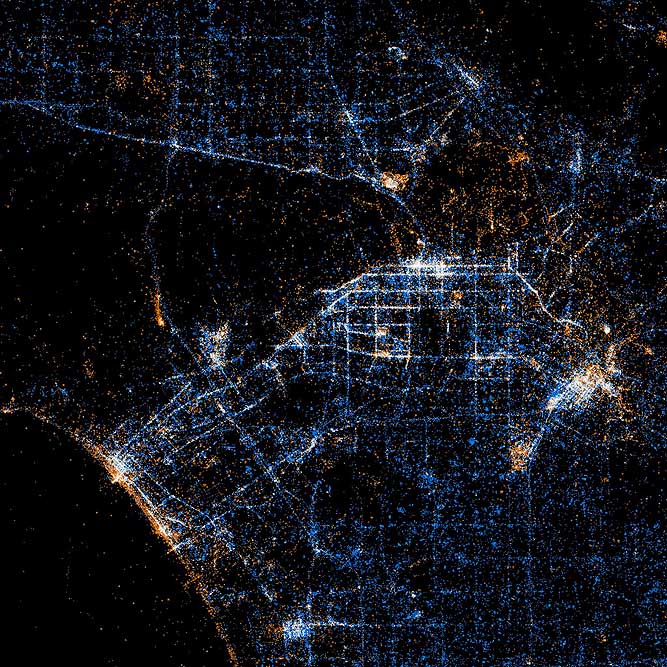
AboveLAWhen I used to vacation in LA, I couldn’t imagine living here.  The city is HUGE and I was always a little unsure about the move (because I was a big chicken), but I knew it was something I was going to have to do in order to make my career aspirations a reality because this is where the action is.  For those of you who do live here, there are so many opportunities to take advantage of; free screenings, free seminars, meet and greets, events, etc. through numerous organizations.  For those of you who do not, there are still plenty of avenues at your disposal; states have a film commission where information can be found in regards to film companies and productions shooting in the area which might lead to other opportunities (guest speakers), the website Meetup lists writers groups (genre specific groups available as well) and opportunities to mix and mingle, and some groups, like Women in Film (which is not only for women), have chapters worldwide.  You may also want to look into your university or community college for classes that offer a chance to meet other writers or offer other opportunities like monthly meetings.

My tip of the day (which I must also take to heart): Get out of the house.  Escape those four walls.  Meet people.  Network.  It’s not only good for your writing but your mental well being too.

Have a great weekend!