The Elusive “Next Idea”

YKYAWWStopEverythingClearing out my email again this week, I came across a few articles I wanted to share, but none of them really corresponded to the other, so I decided to pick one and run with it.

Where do we come up with our ideas?

I’ve written a ramble or two in regards to keeping a notepad with you at all times, or utilizing the note app on your phone with the built-in night light, because we can only keep reiterating that wonderful nugget we’ve discovered for so long before weYKYAWWTexting eventually lose it.  It’s our burden – brilliance at the wrong time.

InkTip shared How to Scientifically Spark Your Creative Genius, and it’s a quick read that will give you a little insight into why we have our best ideas right before we fall asleep, or when we’re doing anything else besides writing.

Not all our snippets are gold on their own, but our minds are complex things that work out plots and intricacies long before we ever get pen to paper, or finger to keyboard.  We don’t know what little blurb of conversation we overheard and wrote down could be the beginnings of something wonderful, and if we fail to write it down, we’ll never find out.

A line of dialogue in a TV series sent my mind whirling about a screenplay that I’ll get to eventually.  It’s dark and kind of twisted, not my usual fare, but it’s good to have ideas outside our genre too.

I’ve been writing fan fiction at work as a way to pass the time, but sometimes during those few mundane hours I’ve come up with ways to fix plot holes or created new characters.  This is why I always have a notepad for writing in my server book.  That’s the strange thing about being a writer, when people ask where we come up with our ideas.  Sometimes it’s from being observant, sometimes, who knows?

Maybe it is just from giving our minds a break from the responsibility that accompanies the idea that as writers, we must always be on.

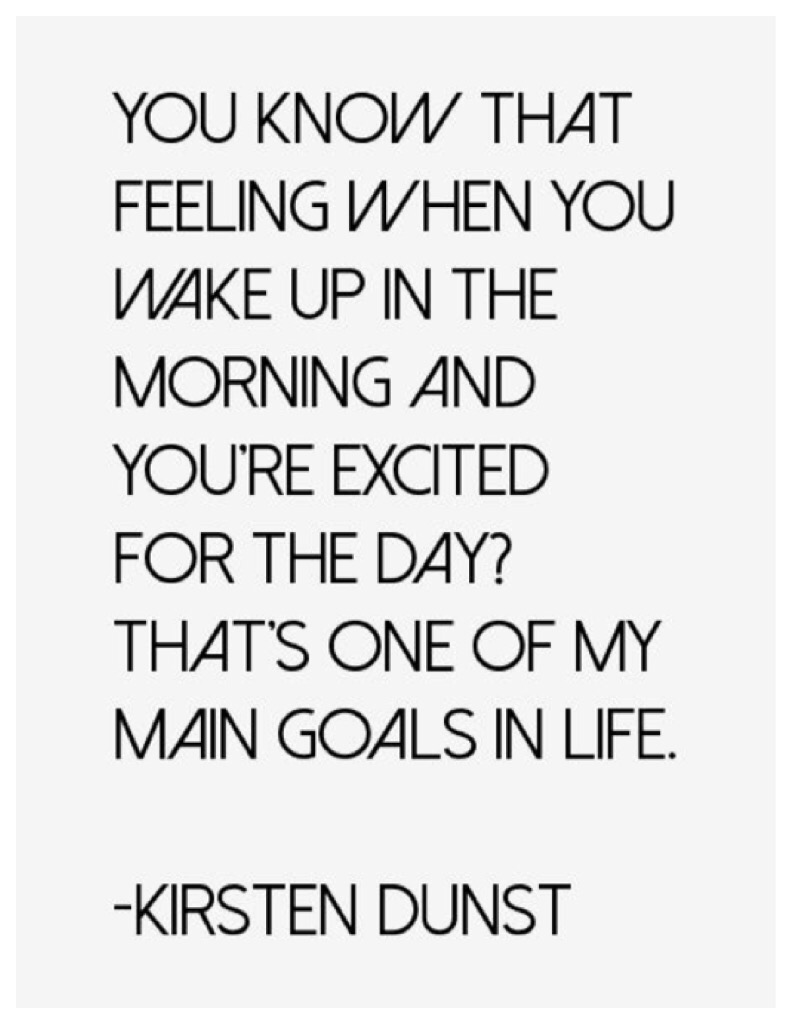
DaydreamingQuote

I’ve heard of writers doing these things called “idea sessions”, and I still can’t get on board with it.  Sitting and writing dozens of ideas in a given time to see if one sticks?  I’m not sure if that’s the way to finding a story you can be passionate about…but since I haven’t tried it, maybe I’m not one to speak.

We’re the first readers of our stories, and I believe we have to love what we’re writing.  If you’re just looking to write a formulaic story, I have to wonder why?

I’ve said this before: everyone has a story, but that doesn’t make everyone a writer.  And I stand by that.  I think as writers, we see everything as potential material, and that’s what separates us.

So when you hear something interesting, or see an image clearly in your mind, don’t lose it, because that could be the start of your next big idea!

Best wishes!
Writing Prompt #82

If you’re looking for more inspiration, as you may already be aware, I have a few Pinterest boards you might like.  I enjoy Pinterest.  Enjoy may not be the right word with some 10,000 pins.

There’s just so much out there.  And the funny thing is, I feel as if I’ve only scratched the surface.

I love the visual, which is probably why I was drawn to screenwriting.  I like to find images that represent what I see in my head when I’m writing, so if you’re like me, browse through some of my boards and see if you can find that specific image for your piece.  Although side note, don’t get stuck in the pin-hole I sometimes find myself in…

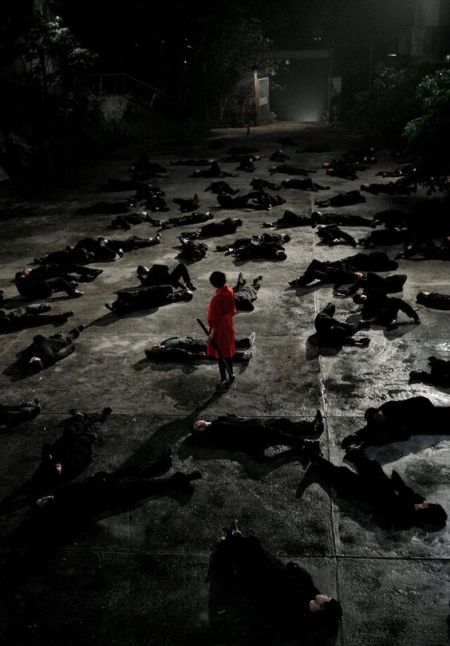
This week’s Writing Prompt is an image that I have been drawn to use for some time, what do you think?

TheGirlinRed

Are you feeling the urge to join me in this week’s challenge?

Happy Writing!

Writing Prompt #81

I had planned on sharing another Writing Prompt today, but then I saw this image and a very particular idea popped in my head.

What does it say to you?

RainyDayinAvignon

I’d love for you all to join me in the weekly Writing Prompt Challenge.  To find an image that speaks to you (there have been 80 (whew) others so far), click on the Writing Prompt tag or use the search bar, and write away!

Happy Writing!

*And side note, May the Fourth be with you! 😉

A Screenwriter’s Technical Execution Checklist

HelpfulTipsThe final checklist in this series from Wordplayer.com  looks at the technical aspect of screenwriting aka format.  For those new to the craft or just unfamiliar, screenplays have a particular format that doesn’t resemble other writing.

Here’s a flirty(?) example from my script, Fate(s).  It’s receiving a polish next month, and I’ve just found two things I want to change…note to self…

FormatExample

As you can see, there’s a lot of white page.  After reading or writing a few, you’ll quickly notice when something is off in someone else’s.  *Side note, even full length features vary from TV scripts.

Screenwriters, and the Hollywood set, use terminology that is also specific to screenwriting, so before you decide to embark on creating your first screenplay, be sure to study up to have a better understanding of what goes into this style of writing.  I suppose that is a good lead-in for a post on terminology.

Social media with its limited characters, and texting in a new form of shorthand, have done nothing to help the writer.  Plus, the illiterate form most texts and updates take now just drive me crazy.  How hard is it to put in a comma or a period or just spell out a simple word?!  Seriously.  It makes me feel old.  I don’t like it.  That being said, as writers hoping to be professionals, we have to separate ourselves from all that and know the rules in order to break them.

  1. Is it properly formatted?
  2. Proper spelling and punctuation?  Sentence fragments okay.
  3. Is there a discernible three-act structure?
  4. Are all scenes needed?
  5. Screenplay descriptions should direct the reader’s mind’s eye, not the director’s camera.
  6. Begin the screenplay as far into the story as possible.
  7. Begin a scene as late as possible, end it as early as possible.  A screenplay is like a piece of string that you can cut up and tie together — the trick is to tell the entire story using as little string as possible.
  8. In other words: Use cuts.
  9. Visual, Aural, Verbal — in that order.  The expression of someone who has just been shot is best; the sound of the bullet slamming into him is second best; the person saying, “I’ve been shot” is only third best.
  10. What is the hook, the inciting incident?  You’ve got 10 pages to grab an audience. *There is talk that you now have to grab attention within 3 pgs.
  11. Allude to the essential points two or even three times.  Or hit the key point very hard.  Don’t be obtuse.
  12. Repetition of locale.  It helps to establish the atmosphere of the film, and allows audience to “get comfortable”.
  13. Repetition and echoes can be used to tag secondary characters.  Dangerous technique to use with leads.
  14. Not all scenes have to run five pages of dialogue and/or action.  In a good screenplay, there are lots of two-inch scenes.  Sequences build pace.
  15. Small details add reality.  Has the subject matter been thoroughly researched?
  16. Every single line must either advance the plot, get a laugh, reveal a character trait, or do a combination of two — or in the best case, all three — at once.
  17. No false plot points; no backtracking.  It’s dangerous to mislead an audience; they will feel cheated if important actions are taken based on information that has not been provided, or turns out to be false.
  18. Silent solution; tell your story with pictures. *This is the whole idea of screenplays and the phrase, “Show don’t tell”.
  19. No more than 125 pages, no less than 110…or the first impression will be of a script that “needs to be cut” or “needs to be fleshed out”.  *Romantic comedies are generally 90 mins which equals 90 pgs.  The bigger concern is the bigger script, especially, from what I’ve read, for new writers.  It shows a lack of editing capability.  Just FYI.
  20. Don’t number the scenes of a selling script.  MOREs and CONTINUEDs are optional.

While screenplay structure is fairly precise, there are a number of tricks to learn that help draw the readers eye down the page and, subsequently, turning pages.  This comes with knowledge and practice.  I’m experimenting with some new things in my pilot, so I guess we’ll see how that works out.

Also, I need to research (and then update) no# 13.  I’ve never heard the term “echo” in regards to screenwriting.  If you know, please share!

I hope you found this series useful!  I’ll try to get back on track with sharing useful/helpful tips…I’ve been bad recently.

Happy Writing!

A Screenwriter’s Character Checklist

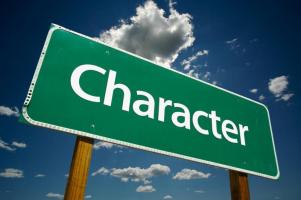
CharacterStreetSignOn Tuesday I posted a concept checklist for screenwriters from the writing/producing team at Scheherazade Productions.  Their website is Worplayer.com.  As promised, here is Part II on Character.

Screenwriting varies greatly from novel writing, but many of the items lend themselves to both sides of the spectrum and are good to keep in mind when developing your characters and story.

The checklist is broken into three parts (the third section deals with technical execution), and is intended to help Hollywood readers find great scripts.  For writers, it’s a resource to utilize to get past the gatekeepers by creating unforgettable characters and worlds.

  1. Are the parts castable?  Does the film have roles stars will want to play?
  2. Action and humor should emanate from the characters, and not just thrown in for the sake of a laugh.  Comedy which violates the integrity of the characters or oversteps the reality-world of the film may get a laugh, but it will ultimately unravel the picture.
  3. Audiences want to see characters who care deeply about something — especially other characters.
  4. Is there one scene where the emotional conflict of the main character comes to a crisis point?
  5. A character’s entrance should be indicative of the characters’s traits.  The first impression of a character is important.
  6. Lead characters must be sympathetic — people we care about and want to root for.
  7. What are the characters wants and needs?  What is the lead character’s dramatic need?  Needs should be strong, definite, and clearly communicated to the audience.
  8. What does the audience want for the characters?  It’s all right to be either for or against a particular character — the only unacceptable emotion is indifference.
  9. Concerning characters and action: a person is what s/he does, not necessarily what s/he says.
  10. On character faults: characters should be “this but also that” complex.  Characters with doubts and faults are more believable, and more interesting.  Heroes who have done wrong and villains with noble motives are better than characters who are straight black and white.
  11. Characters can be understood in terms of “what is their greatest fear?”
  12. Character traits should be independent of the character’s role.  i.e. A banker who fiddles with his gold watch is memorable, but cliche; a banker who breeds dogs is a somehow more acceptable detail.
  13. Character conflicts should be both internal and external.  Characters should struggle with themselves, and with others.
  14. Character POVs need to be distinctive within an individual screenplay.  Characters should not all think the same.  Each character needs to have a definite point of view in order to act, and not just react.
  15. Distinguish characters by their speech patterns: word choice, sentence patterns; revealed background, level of intelligence.
  16. “Character superior” sequences (where the character acts on information the audience does not have) usually don’t work for very long — the audience gets lost.  On the other hand, when the audience is in a “superior” position — the audience knows something that the characters do not — it almost always works.  (NOTE: This does not mean the audience should be able to predict the plot!)
  17. Run each character through as many emotions as possible — love, hate, laugh, cry, revenge.
  18. Characters must change.  What is the character’s arc?
  19. The reality of the screenplay world is defined by what the reader knows of it, and the reader gains that knowledge from the characters.  Unrealistic character actions imply an unrealistic world; fully-designed characters convey the sense of a realistic world.
  20. Is the lead involved with the story throughout?  Do they control the outcome of the story?

I hope you find this checklist useful!  It definitely gives us a number of things to consider.

Happy Writing!

Writing Prompt #80

I set the deadline to complete the rewrite of my pilot for the 30th, which is only a couple of days away.  Because of this, I haven’t written anything else, except a bit of fanfic when I’m at work.  Actually, I’ve written quite a bit of that – 3,000 words.  It’s been slow.

I was debating on which image to share this week…I was drawn to a few.  I decided on this one:

StandingInTheLight

Are you inspired?  Happy Writing!

*Photo by Alina Orel

A Screenwriter’s Concept Checklist

I’ve been slowly going from room to room, computer folder to folder, spring cleaning.  I hate clutter.

HelpfulTipsI came across an old save from a website called Wordplayer.com created by the screenwriter/producer team of Scheherazade Productions, Ted Elliott and Terry Rossio.  They wrote Aladdin and the Pirates of the Caribbean trilogy, among many others.  Considering the success of those films alone, it’s fair to say their advice is worth listening to.

The checklist was created to help Hollywood readers find scripts worthy of moving beyond the elusive gates.  There are three sections total, and I will share the other two as well.  The following are the 20 items readers should keep in mind in regards to “concept” and “plot”, and for writers it’s a resource to understand what may make or break the success of your script getting seen by those with the power to jump start your career.

  1. Imagine the trailer.  Is the concept marketable?
  2. Is the premise naturally intriguing — or just average, demanding perfect execution?
  3. Who is the target audience?
  4. Does your story deal with the most important events in the lives of your characters?
  5. If you’re writing about a fantasy-come-true, turn it quickly into a nightmare-that-won’t-end.
  6. Does the screenplay create questions: Will he find out the truth? Did she do it? Will they fall in love?  Has a strong “need to know” hook been built into the story?
  7. Is the concept original?
  8. Is there a goal?  Is there pacing?  Does it build?
  9. Begin with a punch, end with a flurry.
  10. Is it funny, scary, or thrilling?  All three?
  11. What does the story have that the audience can’t get from real life?
  12. What’s at stake?  Does the concept create the potential for the characters lives to be changed?
  13. What are the obstacles?  Is there sufficient challenge for our heroes?
  14. What is the screenplay trying to say, and is it worth trying to say it?
  15. Does the story transport the audience?
  16. Is the screenplay predicable?  There should be surprises and reversals within the major plot, and also within individual scenes.
  17. Once the parameters of the film’s reality are established, they must not be violated.  Limitations call for interesting solutions.
  18. Is there a decisive, inevitable, set-up ending that is nonetheless unexpected?
  19. Is it believable?
  20. Is there a strong emotion — heart — at the center of the story?  Avoid mean-spirited storylines.

It’s always said that you need to know the rules to break them, so these are just a few, or 20, things to keep in mind when you’re developing and writing your story.  This checklist was created with the screenwriter in mind, but all writers should have an understanding of who their audience is, stakes, obstacles, etc.

Wishing you all the best!  Happy Writing!

Writing Prompt #79

As many of you are aware by now, I have a “thing” for lost worlds, history, etc. I have an entire Pinterest board dedicated to ruins and abandoned places and things.

Forget the obvious.  What does this image say to you?

YellowBrickRoad

Are you inspired to join me in this week’s Writing Prompt Challenge?

Happy Writing!

Quote Monday (on a Tuesday)

I’m not really sure what happened to last week.  I was here.  I was up and mobile, but somehow, my computer remained in a dormant state.  The room which houses it remained dark and almost imperceptible – like that thing you see out of the corner of your eye, and yet when you turn to view it fully, it disappears.  My office was sort of like that, evidently.

And here I am, starting the new week off a day late.  Sheesh.  I think there’s an actual medical term for the state of permanent behind-ness.  If there’s not, there will be one soon, and Marek will be somewhere embedded within that 10-syllable phrase with a picture beside it of me rolling my eyes.  Maybe it will be slightly blurred from me shaking my head…I sometimes like to think it’s Fate’s way of keeping me out of harm’s way.  Eh, it’s as good an explanation as any, I suppose.

YourJourney

Along our journey, we may find it hard not to compare our lives with other, sometimes more successful, or more put together, counterparts.  In turn, there are those who may not grasp what it is we’re chasing.  The above quote is a great reminder that we each have our own path (but may be a little late in getting there).

Don’t let the naysayers derail you from what you truly want to do.  Dream big!

Have a great week!

Quote Monday

I’m sitting on a restaurant patio overlooking the Las Vegas Strip with The Sis, my visiting brother, and his girlfriend. Day drinking was not how I planned on spending my day, but it’s been fun, and (probably) what I needed.

I have been so stressed about a number of things, and taking an actual break from my life is a welcome reprieve. I never really escape when I’m stuck at home because the reminders are all around me. I’m trying to build the life I want…it just needs a little help. That’s why this week’s quote speaks to me –

Have you found this feeling? Please share your insights, because I hope we are all so lucky!

Best wishes!