The Act 3 Hurdle

I don’t have a desk chair.  The one I had previously was old, it wasn’t that comfortable, and it was that ugly gray office style kind of chair with thick black plastic arms.  It also had wheels.  My little dogs did not appreciate the terrible noise the wheels made against the wood flooring in our apartment, and neither did I for that matter.  We had been through a lot together over the 10 plus years, we had written so much, but when The Sis and I decided to leave Los Angeles, I realized I didn’t want to move it again.  Honestly, I didn’t want to see it again.  It was time to end the co-dependent relationship, and so I chucked it into the alley behind our building, hopeful someone would find it and give it a new home – a sad fate for my faithful companion.

So now, I have no chair.  I have to drag the chaise I sit on when I watch tv or game over to my desk, which is too low to utilize as a desk chair, and then have to sit on the back pillow and prop myself up like a booster seat.  My dogs like it because they have more room to spread out beside me, but long bouts of writing are not to be found under such conditions.

It’s so awkward.

It sounds like I’m making excuses as to why very little writing has occurred since I determined to write more, and maybe, I am, a little, but the truth is I’m trapped on how to start Act 3.  I reread the first two acts, and was empowered to finish this story properly…which is why I think I’m struggling to find the right place to start.  I don’t have the time to play around with this one anymore – I have deadlines to make, and this story has been worked over so many times it’s pretty unrecognizable since it debuted many, many, many years ago.
EditingI broke out some screenwriting books hoping to gain some insight, and I thought I’d share a few pearls I discovered.  Hopefully, if you’re struggling, you’ll find them useful as well.

1. Have your hero give up just before they reach their goal.  By the third act they have determined that they want “it” and they are going to go after “it”, but exhausted they give up just short of reaching “it”.  The example used was The African Queen and how they tried so hard to get the boat to the open water, to give up about three feet from it.  Then it rains and sets them adrift.

2. Bookends.  Can the last scene be an answer to the first?  The example was a couple who fall in love during war time and are married on the back of a truck, so at the end of the story they have a proper wedding to commemorate their 50th wedding anniversary.

3. Make a list of all the questions asked or ideas raised throughout your script and be sure to answer them.  This is something I have found to be useful so there aren’t any loose ends or plot holes by the end.  It’s a great way to look back over your story as a whole and see that those ideas/themes continued throughout.

4. My last helpful tip is to talk the story over with someone.  I used The Sis as a spring board and found that by voicing my ideas aloud about how I wanted the story to end was more useful than trying to work it all out in my head.  She asked questions that made me reevaluate my ideas and concepts.  Also, when you explain your story to someone, they can immediately tell you if something doesn’t make sense or doesn’t work.

Although I discovered all this useful insight, I’m no closer to the opening scene I need, but I’m thinking that I just need to jump in.  I know the story, I’ll find a good point to start, and let the chips fall where they may.

When I asked two separate people, I received the same response…”it was a dark and stormy night”.  🙂  I’d love to hear back from all of you.  Any advice on a great third act opener?

Happy Writing everyone!

Submission Season is Upon Us

EditingAs promised, here are a couple of resources to utilize to find contests and their deadlines.  While some screenwriting contests are just beginning (Nicholl, PAGE, and Scriptapalooza), others are nearing their end (Cinestory, Creative World Awards, and Bluecat is already closed).  I have updated my Calendar of Events page to highlight screenwriting contests in particular, and by no means is this a complete list, but they are among some of the more notable ones.

Also, here is a link on writing loglines that you may find helpful.

Aerogramme Writers’ Studio has put together the following list to highlight those events coming up in February and March many of which are open to both experienced and novice writers alike.

If you know of any great contests and would like to share them, please leave me the info in the comments and I’ll be sure to add them to the list!

So let’s get crackin’!  Let’s get our work in order and show them what we’re made of! 😉

Happy Sunday!

Look at this!

HelpfulTipsHello, my fellow creatives!

If you’re not following Aerogramme Writer’s Studio yet, here’s their latest post, and probably a big incentive as to why you should.  I have found a great deal of helpful information on their site, and this is an especially good one.

A residency in France?  Scotland?  Denmark?  Yes to all, please!

Give it a look and Good Luck!


Quotes of the Week & A Little Something Extra

Sometimes knowing a decision has to be made does not make the action occur any quicker.  Nor make it any easier.  Sometimes you need an external persuasive element, and sometimes you don’t want it or need it at all, but it happens nonetheless.  In the face of such challenges, we, not only as writers, but just as people, need to maintain our perseverance.

Yes, this is relevant to what is happening in my own life, as a decision was made for me and The Sis, one we had been kind of trying to avoid for as long as possible.

It is necessary to remind ourselves that bumps in the road, detours, and change are just part of the journey.

TryFallChangeRise       PerseveranceIsStubbornnessW:Purpose    Persevere1

And the “little something extra” is a freebie!  Gotta love that!

I met with an entertainment career coach at the beginning of the year, Shawn Tolleson, here in LA.  She helped to put some things into perspective, something I needed at the time.  Something I may need again. 😉  She is offering a free online class.  Here is the link to sign up.

Happy Wednesday!

Be A One-Hit Wonder

TypewriterFontWriterThe other night when I was talking with my fellow writers at group, one of them mentioned the “10,000 Hours Rule” by Malcolm Gladwell in his book, Outliers.  The idea behind this is that it takes 10,000 hours of practice to achieve mastery in any field.  I would love to be able to figure out where I am on that scale.  How many hours have I put into my writing and when do those hours start?  Did they start when I was a kid telling stories, or when I was a teen trying my hand at my first novel, or when I finally made the decision to go back to school and found screenwriting?  If we start from the moment I started calling myself a writer, I probably have a few thousand hours still to go.

I have seen how my writing has changed over the years, and even in the short time I’ve been blogging.  It has helped to hone my voice.  So a big THANK YOU for helping me do that!  Clearly, I still have a little ways to go.

As writers, we have to continue to learn and grow through practice, reading, and just being a part of the world – where we probably get most of our material.  I have binders full of notes, and every once in a while, I’ll flip through them and stumble across some useful tidbit like the one I’m going to share today: the “Be a One-Hit Wonder” theory.

Yes, it sounds like a negative, but it’s really not.  The idea is that we prioritize our work.  Something I need to learn to do.

The theory is two-fold.  1) Evaluate which pieces are time sensitive; have deadlines (actual or self-imposed), or need lead time.  And 2) Finish shorter pieces first as that boosts confidence and gives us closure.

The idea is to make consistent, manageable progress on those things we can control.

I think this concept is one of the reasons I’ve been escaping into flash fiction and fan fiction, the sense of accomplishment.  And I even called one of my blogs “An Odd Sense of Accomplishment” when I talked about finishing my fanfic piece.  There is a sense of relief at seeing a final product after long stretches without one.

Screenwriting is my passion, but sometimes it is a struggle to get the words on the page.  I think it has to do with the awareness that I am passionate about it, I want it to be the very best it can be, and that every word matters so the value of its importance is heightened and therefore a harder end to find.

And this directly relates to last night’s late post.  I have a third act to finish.  That’s it.  Completely manageable.  Once I find that closure on this particular piece that I have long (long) sought after, I will evaluate all the other pieces in my portfolio and create my One-Hit Wonder list.  Which projects will offer me that sense of accomplishment in a shorter amount of time and lead me further along my journey towards professional writer?  I look forward to finding out.

What do you think of this idea?  Is it something you might implement?

Best wishes!

I’m Baaack (and I Have a Few Things to Share)

Hi everyone!

GISHWHES has ended and I’m trying to return to my abnormal normal.  That routine I love so much was completely lost in a week full of chaos, slapdash, and mind-numbing exhaustion.  Saturday I had to put my house back together, and Sunday I slept about 12 hours and still only felt partially coherent.  There’s still cleaning, laundry, and reorganizing to be done, but for now, at least I can see my floor again.  For a little insight into what we do, one of my team members created a Tumblr account last year and has been slowly adding pictures from this year’s hunt.  You’ll quickly understand that I am not joking when I say it’s a crazy week; 15 people to a team, usually not in the same place, trying to accomplish 185 items.  Madness.

So, now that that’s over, I need to get back to work.  It will probably take a few days to read all the articles and such that are pending in my inbox, but here are a couple things in particular I’d like to share, both found via Aerogramme Writers’ Studio –

1.  The Cesar Egido Serrano Foundation’s ‘Museum of Words’ International Flash Fiction Contest is accepting entries until November 23rd. The competition is for very short fiction pieces (max of 100 words).  Top prize is $20,000, with three runners-up each receiving $2,000.  Not too shabby. 🙂  Here’s the link for more information.

2.  Wattpad (this is the link to the article) – for writers and readers.  This sounds like a wonderful opportunity, and as I’m still making my way through this labyrinth of information, if any of you are familiar with this site, please share your insights.

And to get myself back on track, here’s the quote of the week:

Sometimes we have to let things go

Happy Monday!  And best wishes to you!

The Smurfette Syndrome

characters_smurfette_002

I took a Women’s Studies class in college, in part because it fulfilled a credit requirement, but I quickly learned it was one of the best classes I would ever take.  It really opened my eyes, and it was then that I slowly began to look at the world differently.  I would also learn that I am a bit of a feminist, but don’t let that sway you. 🙂

I don’t think I made a conscious effort to alter my writing, but the types of stories I wanted to tell were definitely intended more for women.  The majority of my scripts have predominately female casts.  Those were a conscious decision.  The funny thing is, this started long before I learned that there was a growing problem in Hollywood, the place I want to be a part of, in the continuation of a lack of a female presence, both in front and behind the camera.

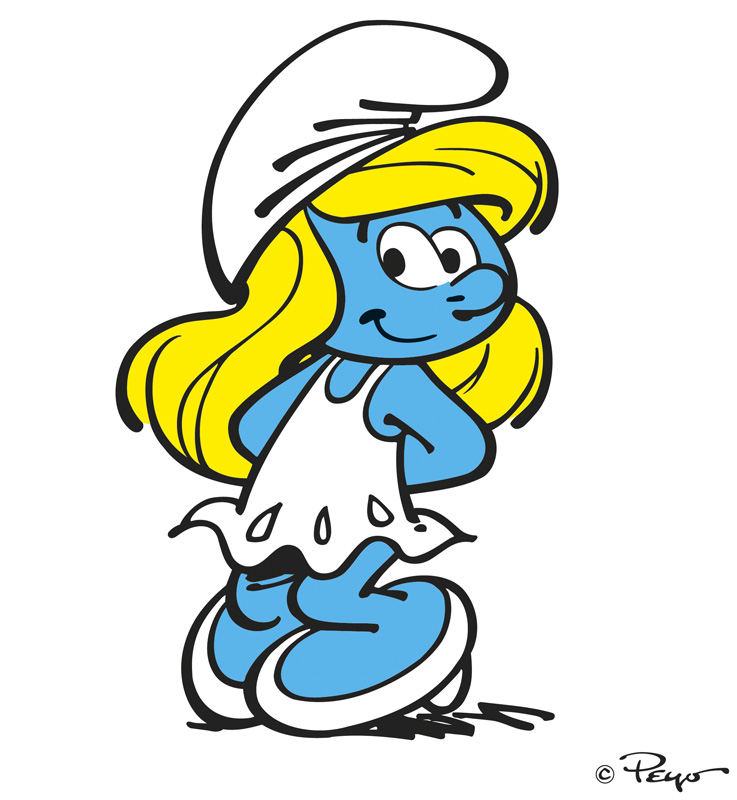
The Smurfette Syndrome aka “the token” girl has continued its prevalence according to the numbers this summer at the movies.  I saw this article about the trend and felt it deserved a share.  There was also this article from a little while ago from the NY Film Academy.  I can’t remember if I shared it before, but it also discusses the inequality in the numbers.

So what’s my point?  Be sure to include the other half of the population in your storytelling, and not in just some token capacity.  Create an opportunity to balance out the scales.  Since many novels are now the basis for films, it would be wonderful to see a surge to encourage a change.  I’m not saying that you have to change all your characters from male to female, but be aware of stereotypes, and don’t perpetuate the trend.  Think of the younger generation.  How they need more role models in their literature and entertainment.  I mean seriously, no solo Wonder Women movie yet?  The fact that Disney is not planning on releasing any further Princess Leia merchandise?  Maybe the lower numbers at the box office is the start of this awareness.

I guess the phrase “change starts at home” might be some of the most useful advice to encourage diversity.

Write well, my friends!

A Quote & Some Tricks for Being More Creative

I like quotes, as I’m sure you’ve noticed.  Some people just say the right thing and why not share their words of wisdom?  So here is this week’s quote, something as writers we probably all need to keep in mind…because we all have those days. 🙂

Patience is not the ability to wait, but the ability to keep a good attitude while waiting. – Joyce Meyer

TypewriterFontWriterAnd not to leave it at that, I thought I’d share this article from the wonderful people at The Write Life, 3 Ways to Train Your Brain to be More Creative, which is designed to help freelancers in particular, but from which we could all benefit.

One trick is to get into a routine.  And we all love that.  I write my screenplays primarily at night when the house is quiet, the courtyard of my building is quiet, it’s dark and I can’t see how lovely it is outside, and when my phone won’t ding.  I’ve always been this way.  I switched to writing my blog and doing “homework” during the daylight hours though, so I feel there’s a separation in my work.

One of the other tricks is to do something fun beforehand in order to warm up your brain.  The author references Pavlov.  On my old laptop I used to play a few hands of solitaire, now I play a little Tetris on my computer, because my original Nintendo system is old.  Yes, I still have it.  I don’t need to do this all the time, not anymore, I’ve trained myself.  But when I get stuck on some facet in my writing, I will play a little Tetris, which doesn’t take any thought process, my hands just keep working, and I can usually work out the problem.  I think it has to do with not trying to force the solution.  I allow my brain to work it out without concentrating solely on it; it keeps working even though I feel like I shut it off.

I hope you find this helpful.

Have a wonderful and productive week!

A Few Rewriting Tips

EditingIn a recent post, I mentioned the brain dead side effect of rewriting.  I am happy to relay that I have at least kept up the momentum, for a whole three days now.  My goal is 15 pgs. a day and I have made it to page 50 in my script, but I am nearing the corner towards that dastardly Act III, so the ambitious page count may falter in the coming days.  And of course, I’ve had another idea for the third act.  Maybe I should write a novel, then I could use all the story ideas I’ve had and propose them as “if you turned left instead of right, this could’ve happened” story lines.

I went to film school, but many of the tools I have learned for screenwriting have come from my own research and interest in bettering my writing; books, articles, and teleconferences.  If you’ve read some of my other posts in regards to the differences between screenwriting and novel writing, you’ll understand what a different mindset screenwriting requires, but I’m not going to go into those details here.  This one is meant for rewriting.

I thought I’d share a few tips, some good ones, or those that I think are good because I found they made the biggest direct impact.  These tips are more inclined for screenwriters, but some of them should be helpful to writers of all forms.  Most of us know about cutting scenes that don’t move story, creating subtext in dialogue, and making sure there’s conflict, etc. but here are a few others I’ve been keeping in mind during this final (please let this be my final) rewrite.  Also, thanks to irscriptwriter who encouraged me to stick with my two spaces after a period rule because it was causing aneurysms. 🙂

1. Wordsmithing – more meaning with fewer words.  For screenwriters this is key as a page count limits us.  It also means to take generic words like “walks” and replace it with saunters, struts, or lumbers which immediately gives the reader a visual and negates further description.

2.  Imagine the location or setting and try to describe it in three vivid and evocative terms.  Do the same with your characters.  As with wordsmithing, the right word can have multiple meanings, and immediately stir the reader’s imagination.

3.  Make the script fun to read.  Screenplays have a specific format, but you can build momentum and action by the style on the page.  We create the story and how the reader will follow it, so in that we have freedom.  There’s also an unspoken rule of making blocks of action only four lines a piece so the reader doesn’t skip through larger blocks of text, just FYI.

4.  Make it a silent film.  Read only the action.  Would a reader still understand what’s happening?  This helps solve the “talking head” problem where exposition is given via dialogue.

I have pages upon pages of rewriting tips, so if anyone is interested in more, I will share them in another post.

Have a great weekend everyone!

Another Tool For Screenwriters (& Maybe Your Next Interview)

HelpfulTips“Tell me a little bit about yourself.”  A statement we’ve heard time and time again during interviews, but who knew the importance of that question when you’re trying to sell a screenplay?  Thankfully I came across this article, The Deal Closer: Your Personal Narrative by screenwriting career coach Lee Jessup, because as screenwriters we needed one more thing to worry about. 😉  To sum up the article, the basic idea is that our writing can be wonderful, but so must we.  Selling our work the first time out is rare, but in order to work – staff writing positions, contract work – we must be able to sell ourselves as well.  Let me add this to my Professional To Do List: #19.  *I exhale a heavy sigh at the revelation of one more element to master.

Have a wonderful weekend!